Vermont’s Ski Industry and Its Role in the State Economy
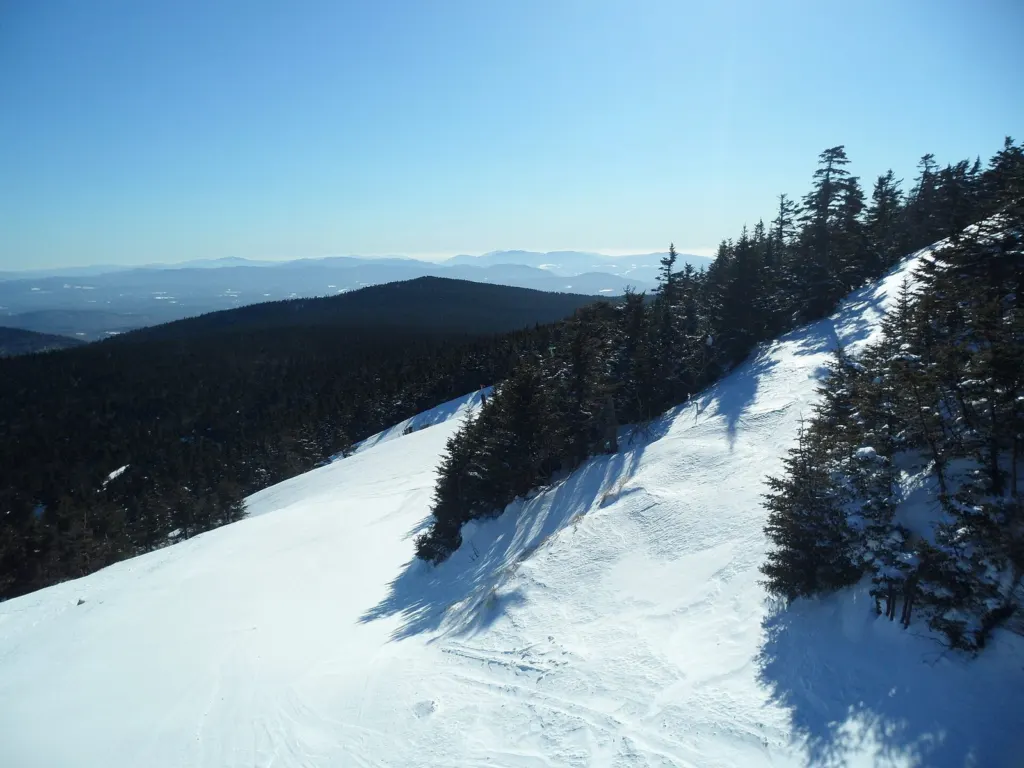
Ski trails at Killington in the Green Mountains of Rutland County, Vermont. Photo: EgorovaSvetlana / Wikimedia Commons, CC BY-SA 4.0.
Winter is big business in Vermont. When snow falls, skiers and riders arrive from across the Northeast and beyond. They fill inns, restaurants, ski shops and gas stations in mountain towns from Jay to Wilmington. Ski areas are among the state’s largest seasonal employers, and the industry is central to Vermont’s image.
Vermont’s ski areas
Vermont has around 20 alpine ski areas plus many cross-country centers. Major resorts include:
- Stowe, Okemo and Mount Snow, owned by Vail Resorts and on its Epic Pass.
- Killington and Pico, sold by POWDR in 2024 to a group of local investors, and still on the Ikon Pass.
- Sugarbush and Stratton, owned by Alterra Mountain Company and on the Ikon Pass.
- Jay Peak, Smugglers’ Notch, Bolton Valley, Burke, Bromley and Mad River Glen, the last a cooperative owned by its skiers.
- Small community hills such as Cochran’s in Richmond and Lyndon Outing Club, often run as nonprofits.
Economic footprint
Ski Vermont, the industry association, and state tourism data describe skiing as a major part of Vermont’s winter visitor economy. The spending happens mostly off the mountain: lodging, dining, retail and services in surrounding towns. Visitors also generate rooms and meals tax revenue for the state, and resort towns depend on those visitors to support businesses year-round.
How the industry has changed
Multi-resort passes
The arrival of Epic (Vail Resorts) and Ikon (Alterra) passes changed how many skiers buy access. Buying a season pass that covers dozens of resorts at a lower price than old day tickets encouraged more skiing but also concentrated crowds at pass resorts on peak days. Independent resorts have responded with their own pass partnerships, such as the Indy Pass.
Corporate ownership
Several of Vermont’s biggest resorts are now owned by national companies. That brought investment in lifts and snowmaking, but it also brought debates about local control, pricing, crowding and labor.
Snowmaking
Reliable snowmaking is now essential. Resorts have invested heavily in energy-efficient snow guns and water systems so they can open trails even in weak natural snow years. Snowmaking uses a lot of electricity and water, which ties the industry to Vermont’s energy policies.
Four-season resorts
Many areas now run mountain biking, hiking, ziplines, concerts and weddings to generate revenue outside winter.
Pressures on the industry
- Weather variability: warm spells and rain events mid-winter can hurt business, and long-term climate trends threaten shorter seasons, especially at lower elevations.
- Staffing: resorts compete for lift operators, ski patrollers, instructors and hospitality workers, and some rely on seasonal international workers on J-1 and H-2B visas.
- Housing: workforce housing near resorts is scarce and expensive, and short-term rentals compete with year-round housing (see Vermont’s housing shortage).
- Affordability: ticket and lodging prices have climbed, raising concerns about access for Vermont families. Community hills and learn-to-ski programs help fill that gap.
The Jay Peak EB-5 legacy
Vermont’s ski industry also carries the memory of the Jay Peak EB-5 fraud, uncovered in 2016. It involved misuse of foreign investors’ money raised for projects at Jay Peak and Burke, and it led to federal prosecutions and a court-appointed receivership. The resorts have since been sold to new owners.
Frequently asked questions
How many skiers visit Vermont? Ski Vermont and resort operators report seasonal skier visits, which vary with snow conditions and the economy. Check the association for current figures.
Are there affordable options? Yes. Community ski areas, midweek and early-season deals, multi-resort passes bought early, and programs such as Ski Vermont’s fifth-grade passport offer discounts for families and students.
What happens to ski towns in summer? Many resort areas now draw summer visitors for mountain biking, hiking, golf, festivals and weddings, which helps keep businesses open year-round and workers employed beyond the ski season.
Is skiing in Vermont at risk from climate change? Researchers project shorter, less reliable natural-snow seasons, especially at lower elevations. Resorts are responding with more efficient snowmaking and four-season operations.
Related coverage
See snowkiting on Lake Champlain, fall foliage tourism, and our profile of the Vermont Chamber of Commerce. More in Business.
Sources
- Ski Vermont: https://skivermont.com/
- Vermont Department of Tourism and Marketing: https://www.vermontvacation.com/
- Vermont Department of Taxes, rooms and meals tax data: https://tax.vermont.gov/