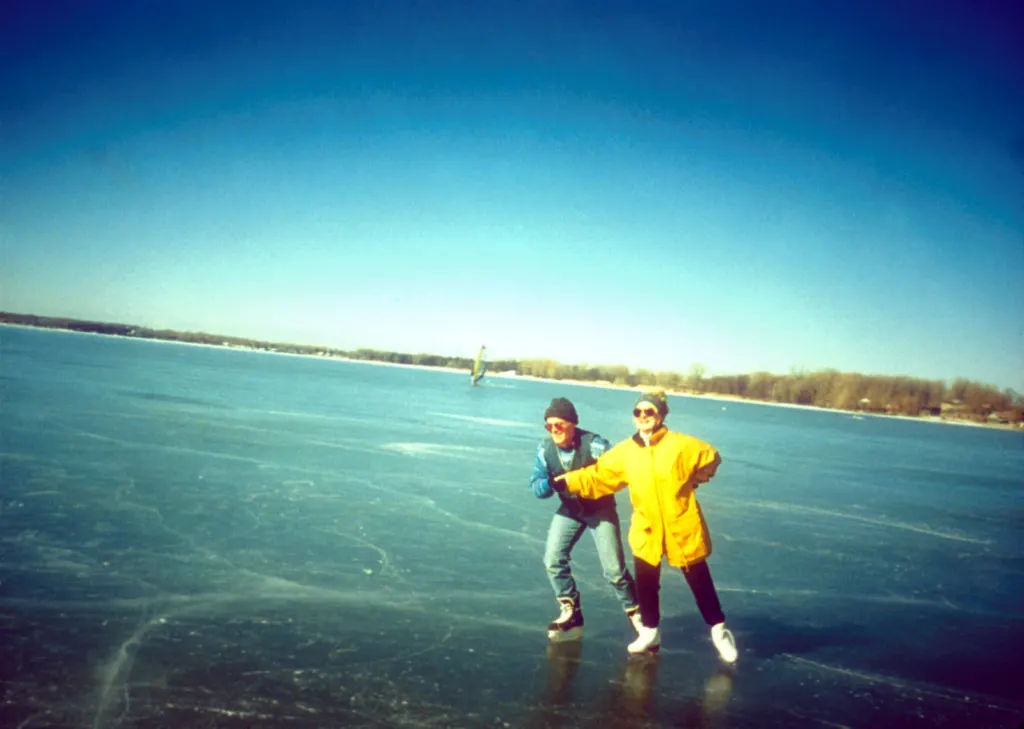
Snowkiting on Lake Champlain: A Guide to Vermont’s Winter Wind Sports
Photo: Unknown or not provided / Wikimedia Commons, Public domain.
Most of the year, Lake Champlain belongs to sailboats, kayaks and fishing boats. In a cold winter, when the shallow bays freeze solid and a steady north wind blows down the lake, it becomes one of the most unusual playgrounds in New England. Snowkiters, ice sailors and iceboaters head out onto the ice and cover miles in an afternoon.
Organized gatherings over the years, including the KiteStorm events near the Sandbar causeway in Milton, helped introduce many Vermonters to the sport. This guide covers where people kite, what you need, and above all how to stay safe on lake ice.
What snowkiting is
Snowkiting uses a large traction kite, like those used in kitesurfing, to pull a rider on skis or a snowboard across snow or ice. Riders steer the kite through the “wind window” to generate power and can travel upwind, downwind and across the wind. Experienced riders can jump and ride for long distances.
It’s related to several other wind sports:
- Ice sailing / wing sailing: riders use a handheld wing on skates or a board.
- Iceboating: sailing craft on steel runners, which can reach very high speeds on smooth, clear ice.
- Kite skating: smaller kites used with ice skates on good clear ice.
Why Lake Champlain works
Lake Champlain runs north-south for about 120 miles between Vermont and New York, and prevailing winter winds often line up with its length. Its shallow bays freeze earlier and more reliably than the deep main lake, which in many recent winters hasn’t frozen fully at all. Snow on top of the ice gives snowkiters a forgiving surface. Clear “black ice” suits skating and iceboating.
Where people go
Common areas, depending on the season’s ice, include:
- The Sandbar area, along the causeway (U.S. Route 2) between Milton and South Hero, near Sandbar State Park.
- Mallets Bay in Colchester.
- Shallow bays around the Champlain Islands, including Grand Isle and North Hero.
- Smaller lakes and ponds elsewhere in Vermont, which may freeze earlier than Champlain.
Access, parking and conditions change every winter. Sandbar State Park is a summer day-use park, so check with Vermont State Parks about winter access and parking. Respect private property and fishing shanties, and give ice fishers plenty of room.
Gear
- Kite: foil kites and inflatable kites are both used. Sizes depend on rider weight and wind strength.
- Harness, control bar and safety leash with a quick-release system.
- Skis or snowboard, or skates for ice.
- Helmet and impact protection. Falls on ice are hard.
- Warm, layered clothing and eye protection.
Take a lesson
Traction kites generate a lot of force, and a gust can lift or drag a rider. Beginners should take lessons from an experienced instructor, start in light, steady winds, and practice on snow-covered fields before going onto the ice. Never kite near power lines, roads or obstacles.
Ice safety
No ice is ever guaranteed safe. Lake Champlain’s ice changes with currents, springs, pressure ridges and weather. Vermont Fish & Wildlife and safety agencies recommend:
- Check thickness often with a spud bar or auger as you go. Commonly cited minimums are about 4 inches of clear, solid ice for a person on foot. Gray, slushy or layered ice is weaker.
- Stay away from inlets, outlets, bridges, causeways, pressure ridges and dark or open patches, where ice is often thin.
- Carry safety gear: ice picks around your neck, a throw rope, a whistle and a phone in a waterproof bag.
- Wear a flotation layer or float suit.
- Never go alone, and tell someone where you’re going and when you’ll be back.
- Know self-rescue: if you go through, turn toward the direction you came from, use ice picks to pull yourself out horizontally, then roll away from the hole.
Ice that was safe in the morning can weaken by afternoon, especially in late season.
Respect the lake and its users
Lake Champlain in winter is shared with ice fishers, skaters, snowmobilers and wildlife. Give way to others, avoid fishing shanties, pack out everything you bring, and watch for wildlife, including bald eagles that winter along the shore.
More from Vermont Daily News
For more winter coverage, read about Vermont’s ski industry and our explainer on Lake Champlain water quality. Browse Community, Local News, Energy & Environment and News, or return to the Vermont Daily News homepage for the latest stories.
Sources: Vermont Fish & Wildlife Department, ice safety; Vermont State Parks, Sandbar State Park; Lake Champlain Basin Program, lake facts.
Add Vermont Daily News as a preferred source on Google (opens in a new tab)