Lake Champlain Water Quality: Phosphorus, Blooms and the Cleanup Plan
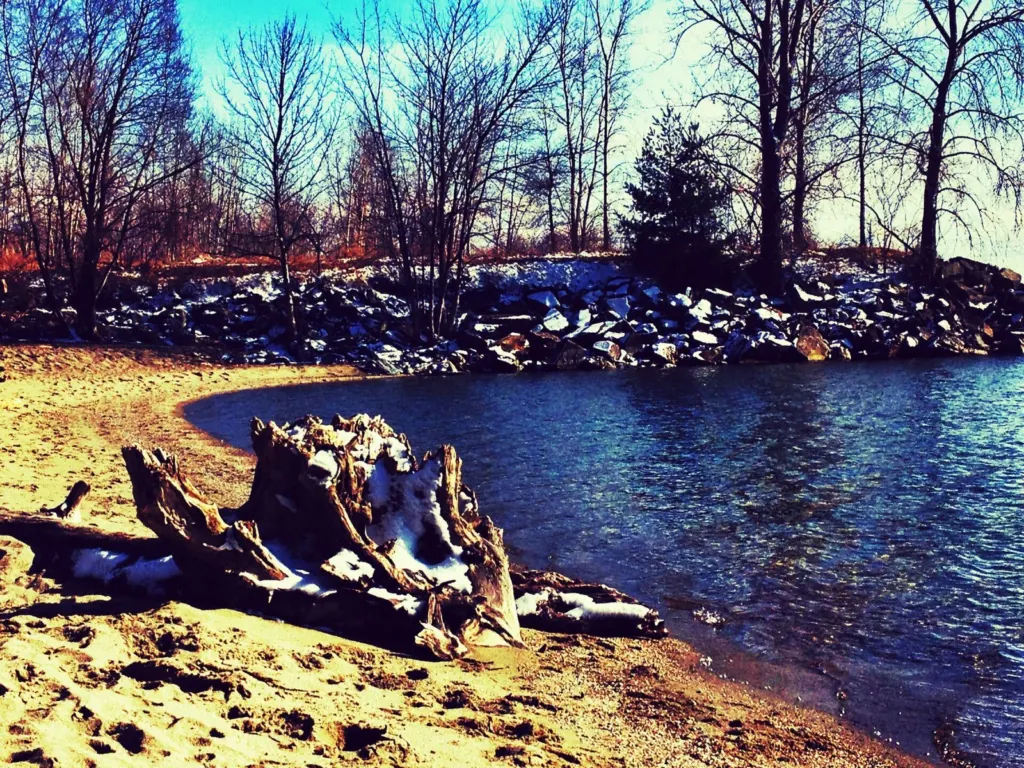
A tree on the Lake Champlain shore in Burlington, Vermont, in early spring. Photo: GilboNormand / Wikimedia Commons, CC BY-SA 3.0.
Lake Champlain is one of the largest freshwater lakes in the United States outside the Great Lakes. It runs about 120 miles from Whitehall, New York, to the Richelieu River in Quebec, and drains a basin covering much of western Vermont, part of northeastern New York and a slice of southern Quebec. It supplies drinking water to tens of thousands of people and supports a large tourism and recreation economy.
In some areas, especially Missisquoi Bay, St. Albans Bay and parts of the northeast arm, the lake has a recurring summer problem: cyanobacteria blooms.
What cyanobacteria blooms are
Cyanobacteria, often called blue-green algae, occur naturally in lakes. Under the right conditions, warm, calm water with plenty of nutrients, they multiply into visible blooms that can look like spilled paint, pea soup or scum on the surface. Some blooms produce toxins that can sicken people and can be deadly to dogs.
Phosphorus: the main driver
The nutrient behind most freshwater blooms is phosphorus. In the Lake Champlain basin it comes from:
- Agricultural land: manure and fertilizer washing off fields, plus soil erosion.
- Developed land: stormwater from roofs, parking lots and lawns.
- Roads: especially gravel back roads that wash out in storms.
- Streambank erosion: unstable riverbanks shed sediment and phosphorus.
- Wastewater treatment plants and septic systems.
- “Legacy” phosphorus that has built up in lake sediments over decades and can be released back into the water.
Warmer temperatures and heavier storms linked to climate change can make blooms more frequent.
The federal cleanup plan
Under the federal Clean Water Act, Lake Champlain’s phosphorus levels exceeded water quality standards in several segments. In 2016, the U.S. Environmental Protection Agency issued a Total Maximum Daily Load (TMDL) for the Vermont part of the lake: a “phosphorus budget” setting how much each lake segment can receive and how much each source category must cut.
Vermont’s commitments under the plan are carried out through the Vermont Clean Water Act (Act 64 of 2015) and later laws, including:
- Required Agricultural Practices for farms, covering manure management, buffers and cover crops,
- stormwater permits for larger developed sites and a Municipal Roads General Permit for town roads,
- upgrades at wastewater treatment plants,
- and river and wetland restoration projects.
Paying for it
Vermont created a Clean Water Fund and, through Act 76 of 2019, a system of Clean Water Service Providers, regional organizations responsible for meeting phosphorus reduction targets in each basin by funding local projects. Federal funding through the Lake Champlain Basin Program and USDA farm conservation programs adds more.
Is it working?
Progress is uneven. The state’s annual Clean Water Initiative Performance Report tracks estimated phosphorus reductions from completed projects, and many have been completed. But lakes respond slowly, and storms such as the 2023 and 2024 floods can wash in large amounts of sediment and phosphorus at once. Some bays still see blooms most summers.
Staying safe
- Check before you go. The Vermont Department of Health posts a cyanobacteria tracker map during the season, based on reports from trained monitors.
- Look at the water. If it’s discolored, scummy or has surface streaks, stay out and keep pets out.
- Rinse off after swimming, and don’t let dogs drink lake water during blooms.
- Report blooms to the Health Department.
Public water systems that draw from the lake treat and test water for toxins.
Frequently asked questions
Is it safe to swim in Lake Champlain? Most of the lake, most of the time, is fine for swimming. Problems are concentrated in certain bays and during late-summer blooms. Check the Health Department’s tracker and beach closure notices, and look at the water before you go in.
Is lake water safe to drink? Untreated lake water is never safe to drink. Public water systems that draw from the lake treat it and test for cyanobacteria toxins during the bloom season.
What can homeowners do? Keep grass clippings and leaves out of streets and drains, maintain septic systems, plant native vegetation along shorelines and streams, avoid phosphorus fertilizer (Vermont restricts its use on lawns), and manage stormwater with rain gardens or rain barrels.
Does New York or Quebec have a role? Yes. The lake is shared. New York and Quebec manage phosphorus in their parts of the basin, and the three jurisdictions coordinate through the Lake Champlain Basin Program and a long-standing water quality agreement.
Related coverage
See invasive watermilfoil in Missisquoi Bay, winter wind sports on Lake Champlain, and how dairy farms are adapting. More in Energy & Environment.
Sources
- Vermont DEC, Clean Water Initiative: https://dec.vermont.gov/water-investment
- U.S. EPA, Lake Champlain phosphorus TMDL: https://www.epa.gov/tmdl/lake-champlain-phosphorus-tmdl-commitment-clean-water
- Vermont Department of Health, cyanobacteria: https://www.healthvermont.gov/environment/tracking/cyanobacteria-blue-green-algae
- Lake Champlain Basin Program: https://www.lcbp.org/