Flood Recovery in Vermont: Where Rebuilding Stands After 2023 and 2024
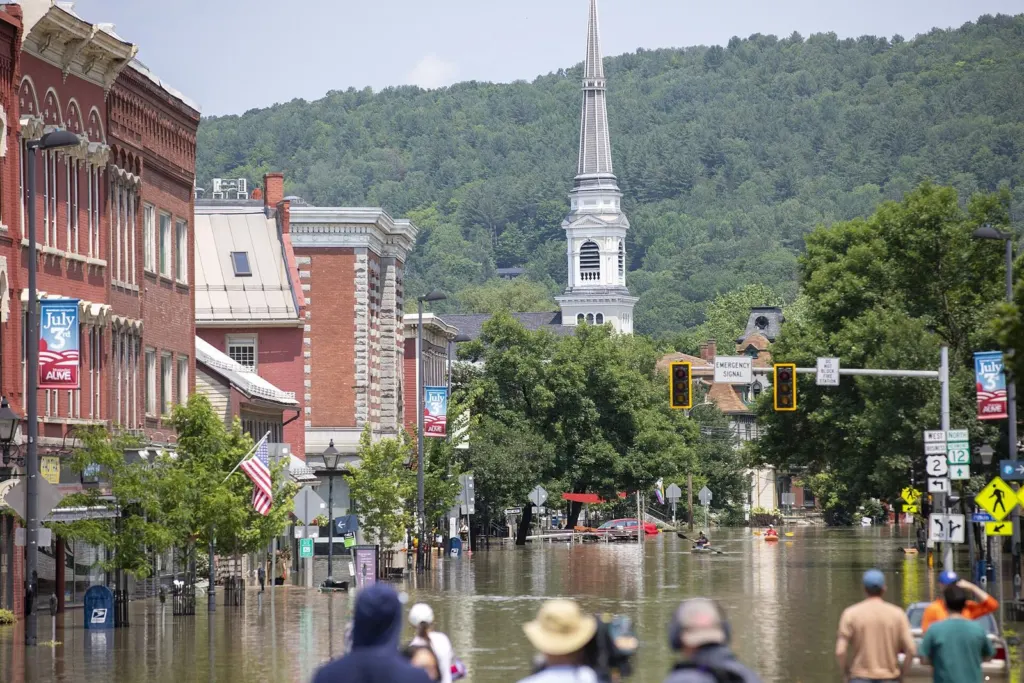
Photo: The National Guard / Wikimedia Commons, CC BY 2.0.
In July 2023, a slow-moving storm dropped several inches of rain on ground already soaked from earlier storms. Rivers across central and northern Vermont rose to levels many residents had never seen. Downtown Montpelier and Barre flooded, and so did Ludlow, Johnson, Hardwick, Waterbury, Londonderry and many other communities. Homes, businesses, roads and farm fields were damaged statewide.
A year later, on July 10–11, 2024, the remnants of Hurricane Beryl brought another round of severe flooding, hitting parts of the Northeast Kingdom, the Barre area and other communities, some of them for the second year in a row. More storms in late July 2024 added damage in northeastern Vermont.
Two years on, recovery is uneven. Here’s where things stand and what’s changed.
The scale of the damage
Both floods led to federal major disaster declarations, opening up FEMA aid to individuals and to towns and the state. Thousands of homes were damaged. Many were mobile homes, often in parks built in floodplains decades ago. Downtown businesses lost inventory and equipment, and some closed for months or permanently. Hundreds of road and culvert sites failed, and farm fields were buried in silt during the growing season.
How recovery has been funded
- FEMA Individual Assistance paid grants to eligible households for temporary housing and basic repairs. These grants are limited and rarely cover full rebuilding.
- FEMA Public Assistance reimburses towns and the state for most of the cost of repairing public infrastructure, but the paperwork is heavy and reimbursement can take years, which strains small town budgets.
- SBA disaster loans offered low-interest loans to homeowners, renters and businesses.
- State programs provided business grants, help for housing and support for towns, including help with cash flow while awaiting FEMA money.
- Philanthropy, including the Vermont Community Foundation‘s flood response funds, and local mutual aid filled many gaps.
Buyouts
For homes that flood repeatedly, rebuilding in place may not make sense. Through FEMA-funded buyout programs administered by Vermont Emergency Management and towns, some homeowners have sold damaged properties at pre-flood value. The land is then permanently cleared and left open to absorb future floods. Buyouts are voluntary and slow, often taking a year or more, but they’ve expanded since 2023.
Rebuilding smarter
Towns and the state are trying to make the next flood less damaging:
- Upsizing culverts and bridges so they can pass more water and debris.
- Restoring river corridors and floodplains, giving rivers room to spread out instead of hitting homes and roads.
- Floodproofing downtown buildings, such as moving utilities above flood levels.
- Better flood warning, including river gauges and alert systems.
The Flood Safety Act (Act 121 of 2024)
In 2024, the Legislature passed Act 121, known as the Flood Safety Act. According to the Agency of Natural Resources, it:
- requires the state to adopt statewide river corridor rules by July 1, 2027, with permits required for new development in mapped river corridors beginning Jan. 1, 2028,
- applies state river corridor regulation to rivers with watersheds of at least 2 square miles,
- strengthens dam safety oversight, including inspection, maintenance and removal of unsafe dams, and moves jurisdiction over a group of hydroelectric dams from the Public Utility Commission to the Department of Environmental Conservation,
- and updates wetlands protections, with a goal of a net gain in wetlands.
What residents can do
- Check flood risk before buying or renting: use the state’s Flood Ready Vermont atlas and FEMA flood maps.
- Consider flood insurance, through the National Flood Insurance Program or private insurers, even outside mapped flood zones. Standard homeowners policies don’t cover flooding.
- Sign up for alerts through VT-ALERT.
- Make a plan for evacuation, important documents and medications.
Frequently asked questions
Does homeowners insurance cover floods? Standard homeowners and renters policies don’t cover flood damage. You need separate flood insurance, usually with a waiting period before coverage starts.
What’s a river corridor? It’s the land a river needs to move and adjust its channel over time. Building in river corridors puts structures at risk from erosion as well as inundation, which is why the Flood Safety Act requires new statewide rules.
Related coverage
See Vermont’s housing shortage, which the floods made worse, and Lake Champlain water quality, which is affected by flood runoff. More in Local News.
Sources
- Vermont Emergency Management: https://vem.vermont.gov/
- FEMA disaster declarations for Vermont: https://www.fema.gov/locations/vermont
- Vermont Agency of Natural Resources, “Act 121: The Flood Safety Act”: https://anr.vermont.gov/
- Flood Ready Vermont: https://floodready.vermont.gov/