Vermont Jobs and Unemployment: How to Read the Numbers
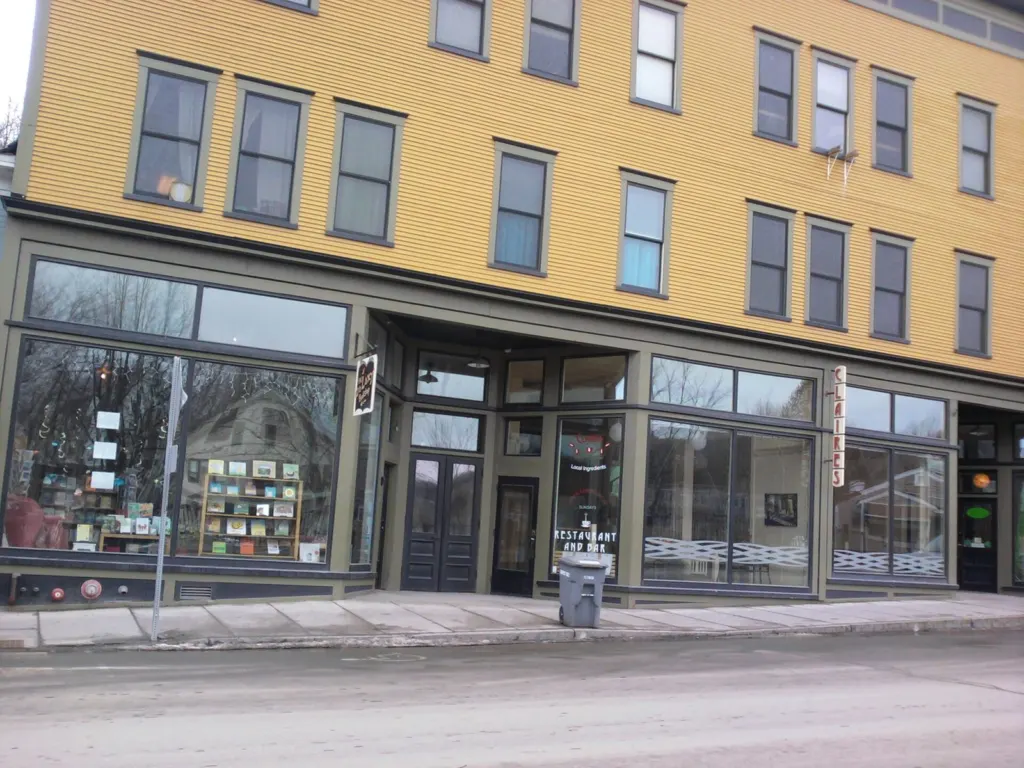
Main Street storefronts in downtown Hardwick, Vermont. Photo: Artaxerxes / Wikimedia Commons, CC BY-SA 3.0.
Vermont’s unemployment rate is often among the lowest in the United States. In August 2026, the Vermont Department of Labor reported a seasonally adjusted rate of 2.6%, unchanged from July. Yet employers across the state, including hospitals, schools, manufacturers, restaurants and ski areas, say they can’t find enough workers.
Both are true, and understanding why requires looking past the headline number.
Where the numbers come from
The Vermont Department of Labor, working with the federal Bureau of Labor Statistics (BLS), publishes two main monthly measures:
- The household survey (labor force data) estimates how many Vermont residents are employed, unemployed and in the labor force. This produces the unemployment rate. In August 2026, the department estimated a labor force of about 337,900, with about 329,200 employed and 8,700 unemployed.
- The establishment survey (payroll jobs) counts jobs at Vermont employers by industry.
The two can move differently. One counts people and the other counts jobs.
Data are also published for labor market areas and counties, and annual data give more detail on wages and industries.
How to read the unemployment rate
The unemployment rate counts people who don’t have a job and are actively looking. It doesn’t count:
- people who have stopped looking,
- retirees,
- people not working because of disability, caregiving or school.
So a low unemployment rate can coexist with a shrinking workforce.
Why Vermont has worker shortages
- An older population. Vermont is one of the oldest states by median age. As baby boomers retire, more workers leave the labor force than young workers enter.
- Slow population growth. Vermont’s population has grown slowly for decades.
- Labor force participation. The share of adults working or looking for work is a key measure to watch alongside unemployment.
- Housing. Workers who’d move to Vermont often can’t find a place to live (see our housing shortage explainer).
- Child care. Lack of affordable care keeps some parents out of work (see our Act 76 explainer).
Tips for reading monthly reports
- Watch trends, not single months. Monthly estimates have margins of error and are revised.
- Compare seasonally adjusted data for month-to-month changes, since Vermont’s economy is highly seasonal with ski season, foliage and summer.
- Look at the labor force size, not just the rate.
- Check payroll jobs by industry to see which sectors are growing or shrinking.
Help for job seekers
- Vermont Department of Labor career resource centers across the state offer job search help, workshops and training referrals.
- Vermont JobLink, the state’s online job board, lists openings.
- Training programs, including apprenticeships and the Vermont Training Program for employers, help workers build skills.
- Unemployment insurance claims are filed through the Department of Labor.
Help for employers
Regional development corporations, the Department of Labor and the Vermont State Workforce Development Board help employers recruit, train and retain workers. Some employers now offer housing assistance and child care help as recruitment tools.
Frequently asked questions
When is new data released? The Vermont Department of Labor typically releases statewide data monthly, a few weeks after the reference month, following the federal BLS schedule.
Why does the number change after release? Monthly estimates are revised as more survey data arrives, and annual benchmarking can change earlier months.
Where do I file for unemployment? Through the Vermont Department of Labor’s online claim system or by phone. The department’s website lists current requirements, including work search rules.
What industries employ the most Vermonters? Health care and social assistance, education, retail trade, manufacturing, and leisure and hospitality are among the largest sectors. Check the latest industry data on the Department of Labor’s website.
How does Vermont compare nationally? Vermont’s unemployment rate is typically well below the national average. BLS publishes monthly state comparisons.
Where can I find wage data? The Department of Labor publishes occupational wage estimates by job title and region, which are useful for job seekers comparing offers and employers setting pay.
Related coverage
See small business financing, the Vermont Chamber of Commerce and the ski industry. More in Local News.
Sources
- Vermont Department of Labor, “Vermont’s Unemployment Rate Remained at 2.6 Percent in August”: https://labor.vermont.gov/press-release/vermonts-unemployment-rate-remained-26-percent-august
- Vermont Department of Labor, economic data: https://labor.vermont.gov/economic-data
- U.S. Bureau of Labor Statistics, Vermont economy at a glance: https://www.bls.gov/eag/eag.vt.htm