Vermont’s Housing Shortage: What the State’s Data Shows
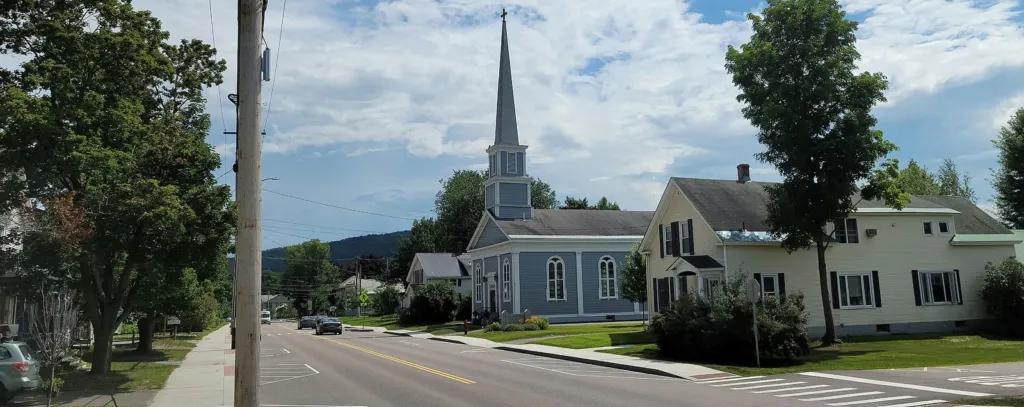
The White Church on Route 100 in the village of Waterbury, Vermont. Photo: Veillg1 / Wikimedia Commons, CC BY-SA 4.0.
Ask Vermonters what worries them most and housing comes up again and again. Employers can’t fill jobs because applicants can’t find places to live. Young adults stay with parents longer. Older residents who want to downsize can’t find smaller homes. Rents and home prices have climbed much faster than wages.
The state’s own data confirms the scale of the problem.
What the Housing Needs Assessment says
Every five years, Vermont publishes a statewide Housing Needs Assessment (HNA), produced for the Department of Housing and Community Development with the Vermont Housing Finance Agency (VHFA). The 2025–2029 assessment estimates Vermont needs 24,000 to 36,000 additional year-round homes by the end of the decade. At the high end, that includes roughly 16,000 to 20,000 rental homes.
The range reflects different assumptions about population growth, how many homes are needed to bring vacancy rates back to healthy levels, how many homes have to replace aging or lost units, and how many households are “missing” because people can’t find housing.
For context, Vermont has built only a few thousand homes a year in recent years, so meeting even the low end requires much faster building.
Signs of the shortage
- Very low vacancy rates. In many parts of Vermont, rental vacancy rates have been far below the 5% or so economists consider healthy. When few homes are open, rents rise and renters have little choice.
- Rising prices. Median home sale prices rose sharply after 2020, outpacing income growth.
- Homelessness. Vermont has had one of the highest rates of homelessness per capita in the country in recent counts, especially after pandemic-era motel housing programs scaled back.
- Workforce strain. Hospitals, schools, ski areas and manufacturers report losing hires because of housing.
Why the gap persists
Several factors combine:
- Decades of slow building. Vermont built relatively little housing for years, so the stock is old and limited.
- High construction costs. Materials, labor and land are expensive, and Vermont’s construction workforce is small.
- Infrastructure limits. Many villages lack municipal water and sewer capacity, which limits denser building.
- Local zoning and permitting. Large minimum lot sizes, parking requirements and appeals have made multifamily homes harder to build in some towns.
- Changing demand. Smaller households, remote workers, and second-home and short-term rental demand in some areas add pressure.
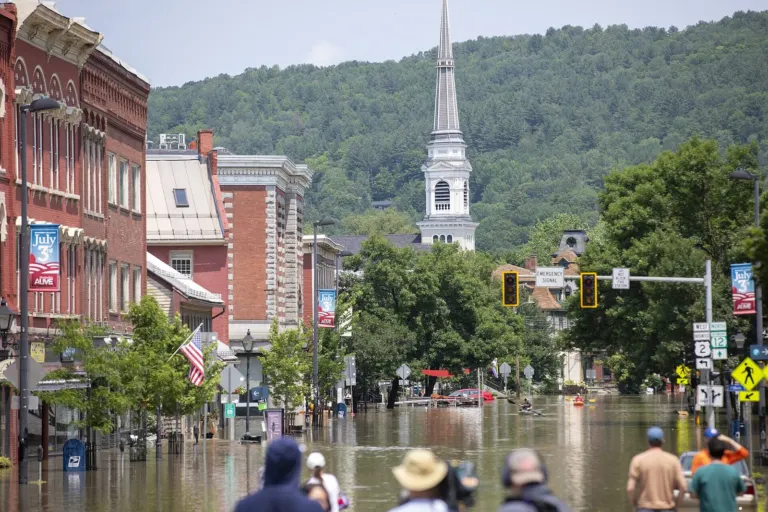
- Floods. The 2023 and 2024 floods damaged or destroyed homes, many in flood-prone mobile home parks and downtowns (see our flood recovery update).
What the state is doing
Lawmakers and the Scott administration have taken several steps:
- Zoning reform. The HOME Act (Act 47 of 2023) and later laws require towns to allow more housing types, such as duplexes and accessory dwelling units, in areas served by water and sewer, and they limit some parking and density barriers.
- Act 250 changes. A 2024 law (Act 181) reworked Vermont’s land-use law to ease review for housing in designated growth areas while strengthening protections elsewhere. Parts take effect over several years.
- Funding. Programs such as the Vermont Housing Improvement Program (VHIP), which helps landlords fix up vacant units, and money through the Vermont Housing & Conservation Board for affordable housing development.
- Tax tools for “missing middle” homes priced for middle-income households.
What residents can watch
- Your town’s zoning bylaw updates and planning commission meetings.
- Town plans and housing committees.
- Infrastructure projects, especially water and sewer expansions.
Frequently asked questions
Why a range of 24,000 to 36,000 homes? The range reflects different assumptions about population growth, vacancy rates and how many households are being held back by the shortage. The report explains each scenario.
What’s “missing middle” housing? It’s housing between single-family homes and large apartment buildings, such as duplexes, triplexes, townhouses and small apartment buildings, often priced for middle-income households.
Can towns still say no to housing? Towns still control zoning and local permits, but recent state laws limit some restrictions on housing in areas with water and sewer service.
Related coverage
See our guides to first-time homebuyer programs, how property taxes work, and Vermont jobs data. More in Local News.
Sources
- Vermont Housing Needs Assessment 2025–2029: https://accd.vermont.gov/housing/plans-data-rules/needs-assessment
- VHFA, housing data and the HNA report: https://vhfa.org/sites/default/files/publications/VT-HNA-2025.pdf
- Vermont Department of Housing and Community Development: https://accd.vermont.gov/housing
- Vermont Housing & Conservation Board: https://vhcb.org/