How Vermont’s Property Tax and Education Funding System Works
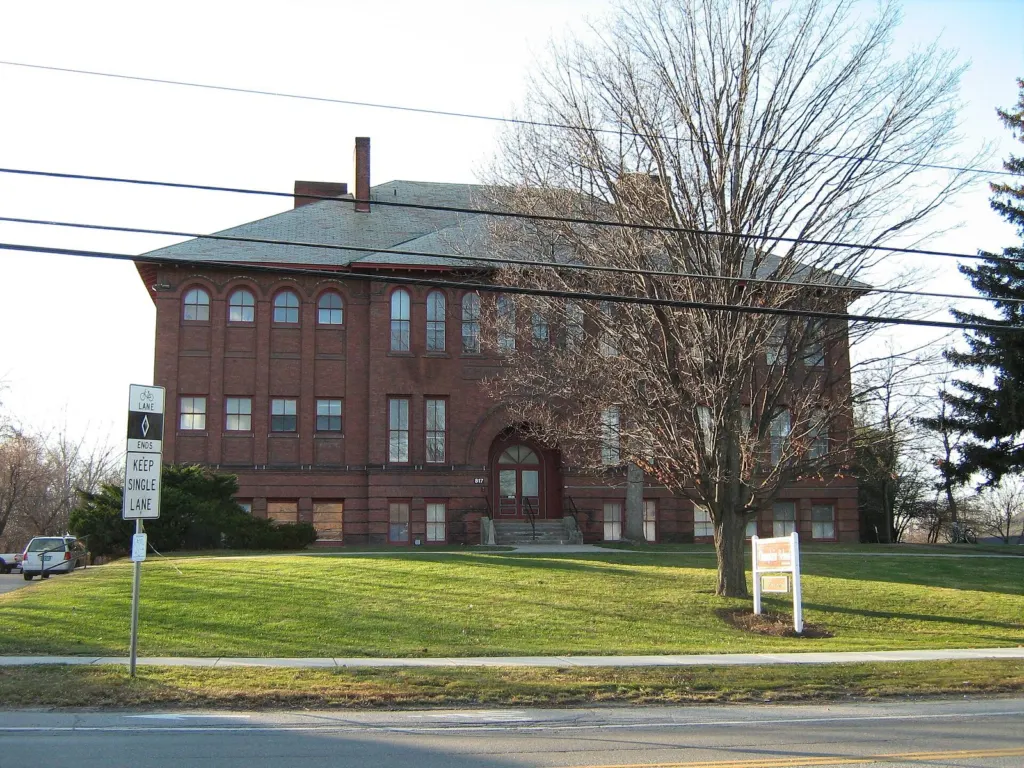
A former Vermont village schoolhouse, now apartments. Photo: Mfwills / Wikimedia Commons, CC BY-SA 3.0.
Few things confuse Vermont homeowners more than their property tax bill. Most of it pays for schools, and Vermont pays for schools differently from almost every other state. After sharp tax increases in 2024, lawmakers began a multi-year overhaul. Here’s how the current system works and what’s changing.
The background: Brigham and Act 60
In 1997, the Vermont Supreme Court ruled in Brigham v. State that the old system, which relied on each town’s property wealth, denied students in poorer towns equal educational opportunity. The Legislature responded with Act 60 (1997) and revised it with Act 68 (2003). Together they created today’s statewide Education Fund.
How the Education Fund works
- Education property taxes go into a statewide Education Fund, along with other sources such as part of the sales tax, the purchase-and-use tax on vehicles, and lottery revenue.
- Each school district’s voters approve a budget, usually on Town Meeting Day.
- The state pays districts from the Education Fund, and each district’s education spending per pupil helps determine the tax rates in its towns.
So when a district spends more per pupil, its residents’ tax rates go up. And because the fund is statewide, overall spending and other revenue across the state affect everyone’s base rates.
Two kinds of property
Vermont’s education tax treats property in two classes:
- Homestead property: your primary residence, which you declare every year.
- Non-homestead property: second homes, rental properties, commercial and industrial property, and land not part of a homestead.
Each class has a statewide base rate, set each year by the Legislature, which is then adjusted for each town based on district spending and the town’s common level of appraisal (CLA), a factor that corrects for differences between local assessments and actual market values.
Income-based help: the property tax credit
Many Vermonters don’t pay education tax purely on home value. Homestead owners with household income below a set limit can get a property tax credit that bases part of their education tax on income instead.
To get it, you must:
- File a Homestead Declaration (Form HS-122) each year, by the April income tax deadline.
- File the property tax credit claim (Schedule HI-144 for household income), even if you don’t otherwise file a Vermont income tax return.
If you don’t file a Homestead Declaration, your home may be taxed at the higher non-homestead rate. Renters with low or moderate income may qualify for a separate renter credit.
Municipal taxes
Your bill also includes municipal taxes set by your town for roads, police, fire and other local services. Those are separate from the education tax and decided locally.
Why taxes jumped in 2024
In 2024, rising school costs (health insurance, staffing, special education and building needs), the end of federal pandemic aid and changes to how students are weighted in the formula combined to drive large increases in many towns’ education tax rates. The resulting backlash shaped the 2024 elections.
Reform: Act 73 and Act 170
In 2025, lawmakers passed Act 73, a major education transformation law. It aims to:
- move toward a foundation formula, a set per-student amount with extra weights for higher-cost students, instead of a system driven by local spending,
- consolidate Vermont’s many small districts into larger districts,
- and restructure how taxes are set.
In 2026, the Legislature passed Act 170, which revised the timeline. According to the Agency of Education, new cooperative education service areas (CESAs) took effect July 1, 2026. Local merger study committees begin work in fall 2026 and report in 2027, voters would decide on mergers in March 2028, and approved mergers would take effect July 1, 2029. The new funding formula depends on further legislative action and would take effect no earlier than the 2029–30 school year.
What to watch
- Your district’s proposed budget and per-pupil spending, published before Town Meeting.
- Merger study committee meetings in your region.
- Annual decisions in Montpelier on base tax rates.
Related coverage
See retirement and taxes in Vermont, first-time homebuyer help, and how the Legislature works. More in Finance.
Sources
- Vermont Department of Taxes, property tax and Homestead Declaration: https://tax.vermont.gov/property
- Vermont Agency of Education, Education Transformation (Act 73 and Act 170): https://education.vermont.gov/schools/school-governance/education-transformation
- Act 170 of 2026, as enacted: https://legislature.vermont.gov/Documents/2026/Docs/ACTS/ACT170/ACT170%20As%20Enacted.pdf