How the Vermont Legislature Works and How to Follow a Session
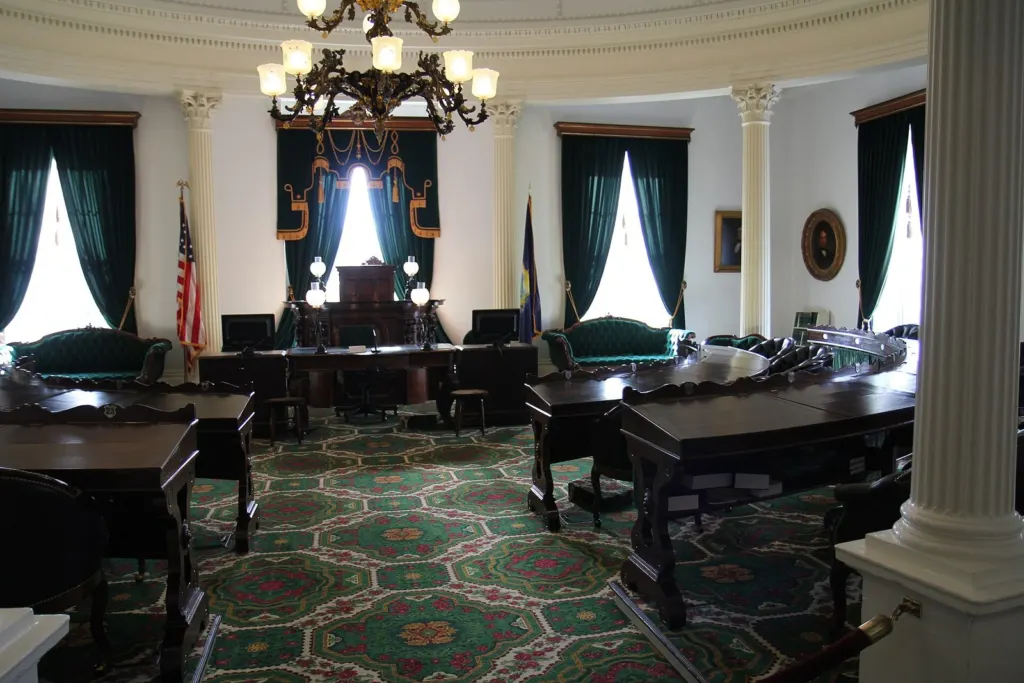
The Vermont State Senate chamber in the State House, Montpelier. Photo: Royalbroil / Wikimedia Commons, CC BY-SA 4.0.
Vermont’s General Assembly is one of the most accessible state legislatures in the country. Its members are part-time citizen legislators: farmers, teachers, retirees, small business owners and others. They represent districts small enough that many constituents know them personally. The State House in Montpelier is open to the public, committee rooms are small, and anyone can walk in and listen.
The basics
- House of Representatives: 150 members, elected from single- and two-member districts.
- Senate: 30 members, elected from multi-member districts that mostly follow county lines.
- Terms: Two years for both chambers. All 180 seats are on the ballot every even-numbered year, including Nov. 3, 2026.
- Leadership: The Speaker leads the House. The lieutenant governor presides over the Senate, while the president pro tempore leads the majority and committee assignments.
- Session: Usually begins in early January and adjourns in May or early June. Lawmakers are paid a weekly salary during the session, plus expenses.
How a bill becomes law
- Introduction. A member introduces a bill, drafted by the nonpartisan Office of Legislative Counsel. House bills start with “H.” and Senate bills with “S.”
- Committee. The bill goes to a policy committee such as Education, Agriculture or Energy. Committees take testimony from agencies, experts, advocates and the public, then amend and vote on the bill.
- Money committees. Bills that spend or raise money also go to Appropriations or Ways and Means/Finance.
- Floor votes. The full chamber debates the bill on second reading, where amendments are offered, and votes again on third reading.
- The other chamber. The bill repeats the process. If the chambers pass different versions, they either agree to each other’s changes or appoint a committee of conference.
- The governor. The governor can sign the bill, let it become law without signature, or veto it. A veto can be overridden by a two-thirds vote of both chambers.
Vermont’s budget, the “Big Bill,” and the annual education tax rate bill are usually among the last measures passed each session.
Vetoes and the balance of power
Gov. Phil Scott, a Republican, has vetoed many bills passed by Democratic majorities since taking office in 2017. Override fights have been central to Vermont politics, from the 2023 child care law (see our explainer on Act 76) to energy policy. After the 2024 elections reduced Democratic majorities, vetoes became harder to override, which pushed more negotiation between the Legislature and the administration.
How to follow along
The Legislature’s website, legislature.vermont.gov, lets you:
- Search bills by number, keyword or sponsor and read every version.
- See committee agendas, documents and written testimony.
- Watch live and recorded video of committees and floor sessions.
- Find your legislators and their contact information.
How to take part
- Contact your legislators by email or phone. Many hold local “legislative breakfasts” or forums during the session.
- Submit written testimony or ask a committee to testify. Committees decide whom to hear, but many welcome public input, especially on bills affecting particular communities.
- Visit the State House. Galleries are open during floor sessions, and tours are offered.
Frequently asked questions
Can anyone testify? Committees decide who testifies, but members of the public can ask to testify or submit written testimony, which is usually posted on the committee’s web page.
Where can I see how my legislator voted? Roll call votes on the floor are recorded in the House and Senate journals and on the Legislature’s website. Many votes are voice votes, which don’t record individual members.
What’s the difference between a bill and a resolution? Bills change the law. Resolutions express the Legislature’s views or honor people and events, and generally don’t have the force of law.
Is there a special session? The governor can call a special session, and the Legislature sometimes reconvenes for a veto session, usually in June.
How do I find my legislators? Use the “Find My Legislator” tool on the Legislature’s website, which looks up your House and Senate districts by address.
Related coverage
See Town Meeting Day explained, Vermont’s statewide elected officials, and the 2026 election guide. More in Politics & State Government.
Sources
- Vermont General Assembly: https://legislature.vermont.gov/
- Vermont Office of Legislative Counsel: https://legislature.vermont.gov/legislative-counsel
- Vermont State House, visitor information: https://vermontstatehouse.org/