The Vermont Chamber of Commerce and Its Role in the State’s Business Life
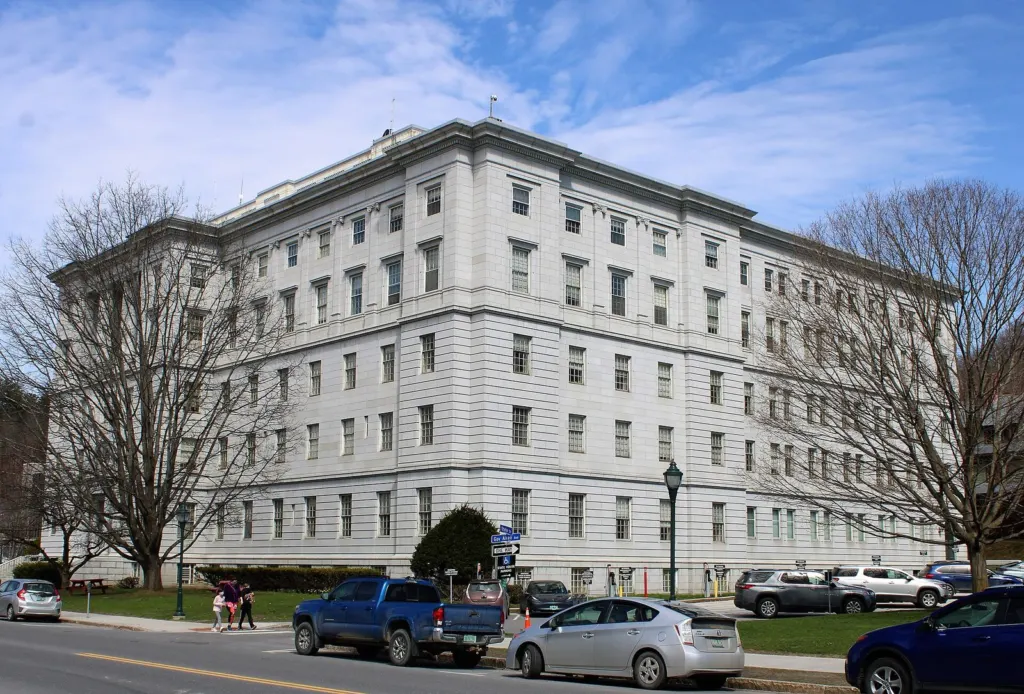
The state office building at 133 State Street in Montpelier, near the State House. Photo: Farragutful / Wikimedia Commons, CC BY-SA 4.0.
Vermont’s business community is dominated by small employers. Most Vermont businesses have only a handful of workers, and the state has relatively few large corporations. That makes business associations important: they give small employers a collective voice in the Legislature and a way to connect with each other.
The largest of these statewide groups is the Vermont Chamber of Commerce. This guide explains what it does and how it fits alongside the many other business organizations in the state.
What the Vermont Chamber is
The Vermont Chamber of Commerce is a private, nonprofit membership organization representing businesses of many sizes and industries across the state. Members range from sole proprietors and family-owned inns to manufacturers, banks, health care organizations and colleges. Its offices are in central Vermont, near the State House in Montpelier.
Advocacy in Montpelier
A major part of the chamber’s work is advocacy. Each legislative session, it publishes priorities and lobbies lawmakers and the governor’s administration. Issues it has focused on in recent years include:
- Workforce: Vermont’s aging population and tight labor market (see our jobs data explainer).
- Housing: the shortage of homes affordable to workers (see our housing explainer).
- Taxes and affordability, including property taxes, payroll taxes and the cost of doing business.
- Health care costs for employers.
- Regulation and permitting, including Act 250 land-use review.
The chamber’s positions don’t always match those of other groups, and it sometimes disagrees with environmental, labor and advocacy organizations, as is typical of statehouse politics.
Tourism and hospitality
The Vermont Chamber also serves as a voice for tourism and hospitality businesses, such as lodging, restaurants and attractions, through affiliated associations. Tourism matters a lot to Vermont’s economy, from fall foliage season to ski season.
Events and programs
Over the years, the chamber has run a busy calendar of business events: business expos and trade shows, economic outlook conferences, industry summits, networking events and awards. These give small businesses a chance to meet suppliers, customers and policymakers. Its current events are listed on its website.
It also offers member benefits such as educational programs, and at times group purchasing or insurance programs.
Regional and local chambers
Separate from the statewide chamber, Vermont has many regional and local chambers, such as those serving the Lake Champlain region, central Vermont, the Rutland region, the Northeast Kingdom, southern Vermont and individual towns. Local chambers tend to focus on community promotion, visitor information, networking and local events.
Other business organizations
Vermont businesses are also represented by groups such as:
- Associated Industries of Vermont (manufacturers and employers),
- Vermont Businesses for Social Responsibility (values-led businesses),
- Vermont Retail & Grocers Association,
- industry groups for farming, ski areas, builders, banking and more,
- and regional development corporations, which help businesses with sites, financing and workforce.
For financing and free advising, see our guide to small business grants and loans.
How to get involved
Businesses can join the statewide or local chamber, attend events, respond to policy surveys and testify on legislation. Residents interested in how business groups influence policy can follow committee hearings on the Legislature’s website.
More in Business.
Frequently asked questions
Do I have to join the statewide chamber to join a local one? No. The Vermont Chamber of Commerce and regional or town chambers are separate organizations with separate memberships, though some businesses join both.
Does the chamber speak for all Vermont businesses? No organization does. The chamber represents its members, and its positions are set through its own governance. Other business groups, such as Vermont Businesses for Social Responsibility, sometimes take different positions on the same issues.
Can non-members attend chamber events? Many events are open to non-members, sometimes at a higher price. Check event listings for details.
How can I find the chamber’s legislative positions? The chamber typically publishes its legislative priorities and session updates on its website, and its staff testify before legislative committees, where written testimony is posted on the Legislature’s website.
Does the chamber endorse candidates? Business associations generally focus on issues and policy positions. Check the organization’s own statements for its practices on political activity.
Sources
- Vermont Chamber of Commerce: https://www.vtchamber.com/
- Vermont Agency of Commerce and Community Development: https://accd.vermont.gov/
- Vermont General Assembly (committee hearings and testimony): https://legislature.vermont.gov/