Wood Pellet Heating in Vermont: Costs, Incentives and Schools That Use It
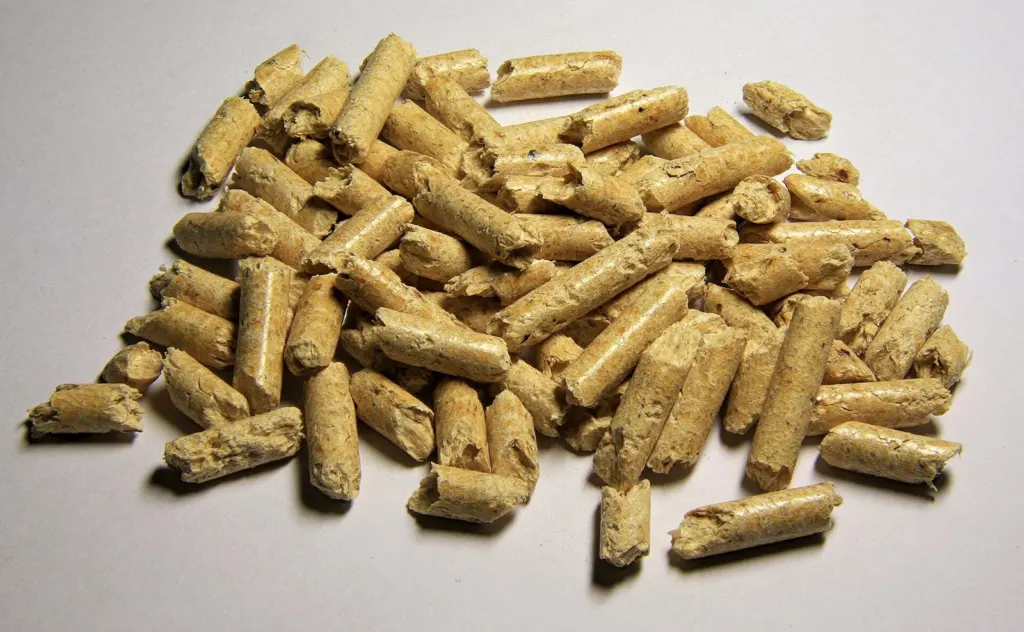
A pile of wood pellets used as heating fuel. Photo: D-Kuru / Wikimedia Commons, CC BY-SA 3.0 at.
Vermont is one of the most heavily forested states in the country, and it has a long history of heating with wood. That goes beyond woodstoves in farmhouses. For decades, Vermont has been a national leader in wood heat for schools and public buildings, and wood pellets have become a common alternative to oil and propane in homes and businesses.
A Vermont tradition in schools
Starting in the 1980s, Vermont school districts began replacing oil boilers with woodchip heating systems, supported by state programs that helped with planning and costs. Dozens of schools now heat wholly or partly with wood chips or pellets. The approach later spread to colleges, state buildings, hospitals and businesses.
Colleges have used wood systems for heat and teaching. The Randolph Center campus of what is now Vermont State University (formerly Vermont Technical College), which trains students in agriculture, engineering and energy, has been one example of a campus using renewable heating projects as learning tools.
How pellet and chip systems work
- Wood pellets are made from compressed sawdust and wood residues. They’re dry, uniform and easy to automate. A pellet boiler or furnace draws pellets from a storage bin or outdoor silo with an auger, lights them automatically, and adjusts the burn to heat demand. Bulk pellets are delivered by truck and blown into the silo, much like oil.
- Wood chips are cheaper per unit of energy but bulkier and wetter. They suit larger buildings with room for chip storage and delivery trucks.
- Pellet stoves heat a single space and are filled by hand from bags.
Modern automated boilers burn far more cleanly and efficiently than older wood equipment, and many include emissions controls.
Costs
Pellet heat can be cheaper per unit of heat than heating oil or propane, but fuel prices change, so the comparison shifts from year to year. Points to keep in mind:
- Up-front cost. Pellet boilers and storage systems cost more to install than oil or propane boilers.
- Fuel cost. Pellets have historically been more stable in price than oil, though they’ve also spiked at times.
- Maintenance. Systems need ash removal and periodic cleaning.
- Space. You need room for a boiler and storage.
The Vermont Department of Public Service publishes regular fuel price comparisons that show the cost per million BTUs of different fuels.
Emissions and forests
Burning wood releases fine particulates, a concern for air quality and health, especially from older or poorly run equipment in valleys during winter inversions. That’s why Vermont emphasizes advanced wood heating with modern, efficient, low-emission equipment.
Supporters also point out that heating with local wood keeps fuel spending in the regional economy and supports Vermont’s forest products industry, and that sustainably managed forests regrow. How wood heat counts in climate accounting is debated, and Vermont’s climate plans treat it as one tool among several, alongside weatherization and heat pumps.
Incentives and help
- Efficiency Vermont and Vermont utilities have offered rebates for advanced wood heating systems at various times. Check current offers.
- The state’s Clean Energy Development Fund has supported advanced wood heating projects.
- Federal tax credits have applied to qualifying high-efficiency biomass equipment for homes. Rules have changed in recent federal laws, so confirm eligibility.
- The Vermont Department of Forests, Parks and Recreation offers resources on wood energy and sustainable forestry.
Is it right for you?
Wood pellet heat tends to work best for buildings with high heating loads, space for storage, and an owner willing to handle some maintenance. Many Vermont homeowners combine approaches: heat pumps for shoulder seasons and a pellet or other backup system for the coldest weeks.
Frequently asked questions
How many pellets does a home use? It depends on the house size, insulation and climate. A typical whole-house pellet boiler in a cold Vermont winter may burn several tons a season. Weatherizing first reduces fuel use with any heating system.
Can I convert my oil boiler to pellets? Usually the oil boiler is replaced with a pellet boiler that connects to your existing hot-water distribution system. Some homeowners keep the oil boiler as a backup. A qualified installer can assess your system and storage space.
Are pellets made in Vermont? Pellets sold in Vermont come from mills in Vermont and around the region. Buying from regional mills keeps more fuel spending in the Northeast economy.
What about air quality? Modern certified pellet and chip boilers produce far fewer emissions than older wood boilers and stoves. Proper installation, a suitable chimney and regular maintenance keep emissions low.
Related coverage
Read our explainer on Vermont’s renewable energy and clean heat laws, our guide to business solar, and our look at dairy farms and working lands. More in Energy & Environment.
Sources
- Vermont Department of Forests, Parks and Recreation, wood energy: https://fpr.vermont.gov/
- Vermont Department of Public Service, fuel price reports: https://publicservice.vermont.gov/
- Efficiency Vermont: https://www.efficiencyvermont.com/
- Biomass Energy Resource Center / Renewable Energy Vermont: https://www.revermont.org/