Working Lands: How Vermont Dairy Farms Are Adapting
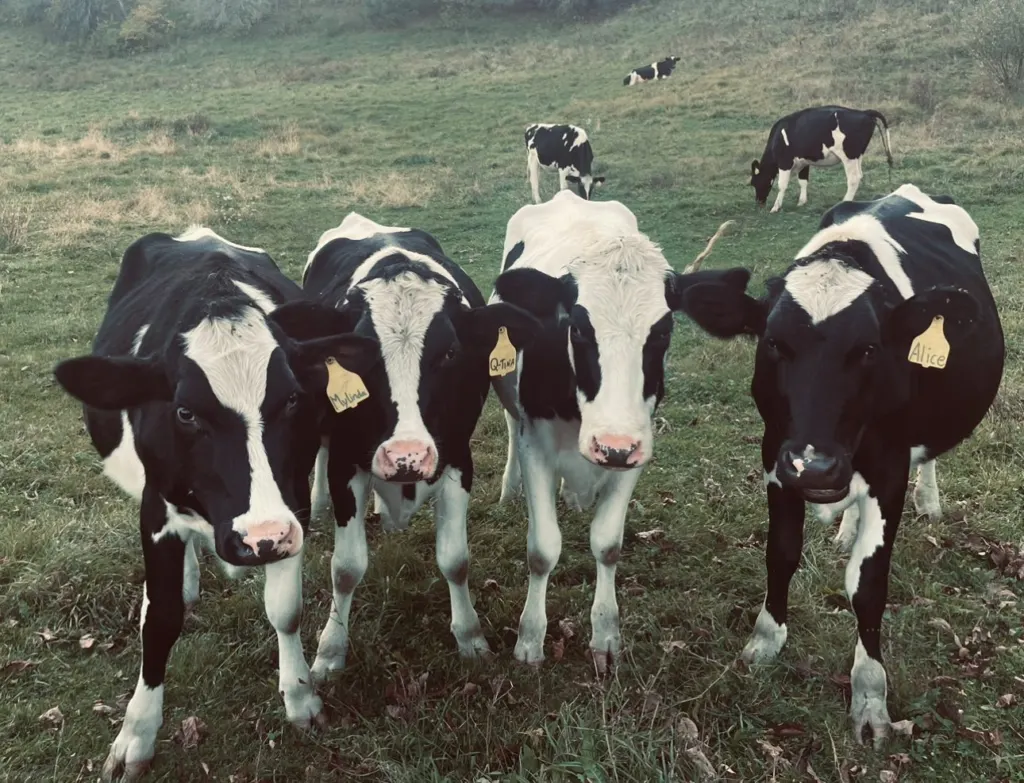
Holstein dairy cows in a pasture in Tunbridge, Vermont. Photo: Momolovesyou / Wikimedia Commons, CC0.
Drive almost any back road in Vermont and you’ll pass a barn. Many no longer house cows. Dairy has been Vermont’s dominant farm sector for more than a century, but the number of dairy farms has fallen dramatically: from thousands in the mid-20th century to a few hundred today, according to Vermont Agency of Agriculture records. The average herd has grown, and total milk production has stayed relatively steady, so fewer, larger farms produce most of the milk.
Here’s what’s driving that change and how the remaining farms are adapting.
Why farms have consolidated
- Milk prices are set largely by federal milk marketing orders and national and global markets. They swing widely and have often fallen below small farms’ cost of production.
- Economies of scale: larger herds spread fixed costs such as equipment and facilities over more milk.
- Labor: dairy is a 365-day job, and many farms rely on immigrant workers, many from Mexico and Central America, which raises immigration and housing issues.
- Generational transition: when farmers retire, children often choose other careers, and land prices can make it hard for new farmers to buy in.
How farms are adapting
Organic and grass-fed milk
Vermont has a large share of organic dairy farms, selling to buyers such as Organic Valley, Stonyfield and Horizon. Organic and grass-fed milk usually earns higher prices, though organic farms have faced their own crises, including contract cancellations by a major buyer in 2021–22 that forced many Northeast farms to scramble for new markets.
Value-added products
Some farms process their own milk into cheese, yogurt, butter, ice cream or bottled milk, capturing more of the retail dollar. Vermont’s reputation for artisan cheese grew partly from farms making this shift (see our profile of Vermont’s small makers). Cabot Creamery, a farmer-owned cooperative brand, is a large-scale example of the same idea.
Diversification
Farms add income through maple (see our maple technology story), beef, crops, agritourism, farm stays and on-farm stores. Some have methane digesters that turn manure into electricity sold to utilities, and others lease land for solar.
Conservation practices
Vermont’s Required Agricultural Practices set standards for manure storage and spreading, buffers along streams, and soil management, mainly to reduce phosphorus runoff into Lake Champlain and other waters. Many farms have adopted:
- cover crops to hold soil over winter,
- no-till or reduced-tillage planting,
- manure injection instead of surface spreading,
- and better barnyard and manure storage.
State and federal cost-share programs, including USDA’s EQIP and Vermont’s Agency of Agriculture programs, help pay for these.
Support for farms
- Vermont Agency of Agriculture, Food & Markets: grants, technical assistance and regulation.
- UVM Extension: farm business planning, agronomy and dairy management advice.
- Vermont Housing & Conservation Board: buys conservation easements that keep farmland in agriculture and lower land costs for the next generation.
- Farm viability programs that offer business planning to farmers.
The road ahead
Vermont’s dairy sector faces continued pressure from milk prices, climate impacts (wet springs, floods and droughts), labor and federal policy changes. But dairy still shapes Vermont’s landscape, economy and identity, and the farms that remain have become more efficient, diversified and environmentally attentive than their predecessors.
Frequently asked questions
How many dairy farms does Vermont have? The number changes every year. The Vermont Agency of Agriculture tracks licensed dairy farms and publishes updated counts, which in recent years have been a few hundred, down from thousands decades ago.
Where does Vermont milk go? Much of it is sold through cooperatives and processors. Some is made into cheese, yogurt and butter in Vermont, and a large share is shipped to processors elsewhere in New England and the Northeast.
Are small dairy farms disappearing completely? Small farms continue to exist, especially those with organic, value-added or direct-to-consumer niches. But most milk now comes from larger herds.
How can consumers help? Buying Vermont dairy products, visiting farm stores and markets, and supporting farmland conservation all help keep dairy farms viable.
Related coverage
See our farmers markets guide and small business financing for farms and food businesses. More in Business.
Sources
- Vermont Agency of Agriculture, Food & Markets, dairy: https://agriculture.vermont.gov/
- UVM Extension, agriculture: https://www.uvm.edu/extension/agriculture
- Vermont Housing & Conservation Board, farmland conservation: https://vhcb.org/
- USDA NASS, Vermont statistics: https://www.nass.usda.gov/Statistics_by_State/New_England_includes/