How Vermont’s Maple Producers Use Technology to Boost Yields
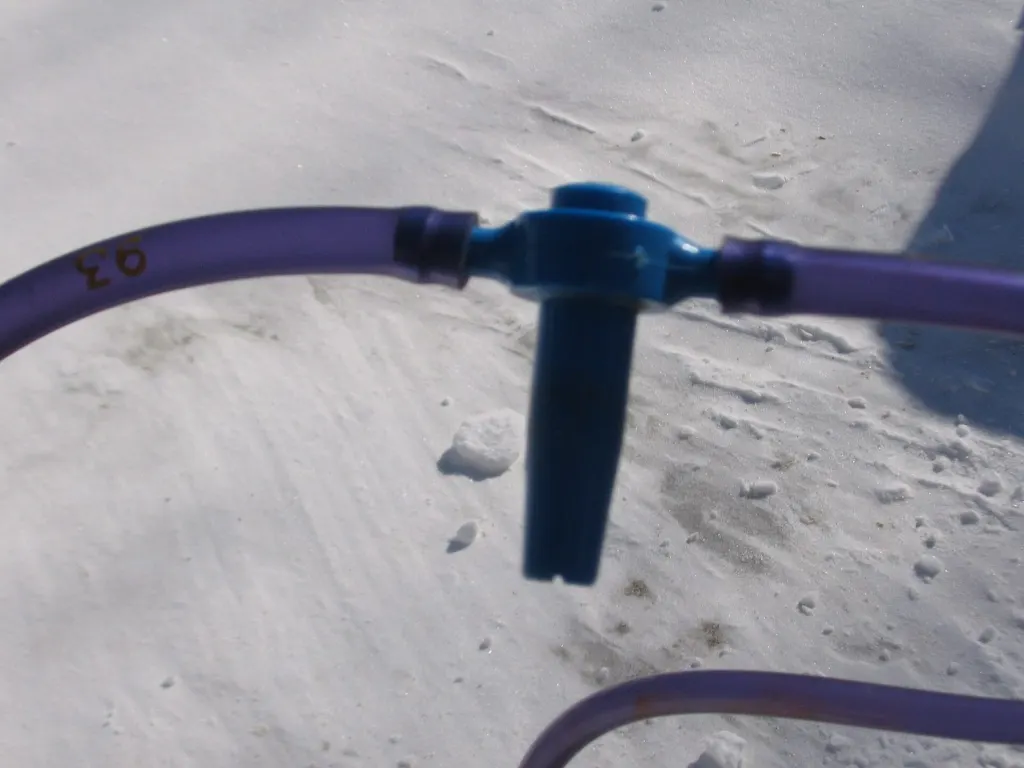
Plastic maple sap tubing attached to a tap on a sugar maple. Photo: Jomegat / Wikimedia Commons, CC BY-SA 4.0.
Vermont has led the country in maple syrup for decades, and the gap keeps widening. According to the U.S. Department of Agriculture’s National Agricultural Statistics Service (NASS), Vermont produced about 3.09 million gallons in 2026, out of a U.S. total of roughly 5.88 million gallons. That puts the state at a little more than half of national production, and the Vermont Agency of Agriculture, Food and Markets said it was the third straight year Vermont led the nation.
Weather still makes or breaks a season, since sap runs only when freezing nights are followed by thawing days. But a run of technical changes over the past few decades helps explain how a state of about 650,000 people produces half the country’s syrup. This article looks at those changes and what they mean for producers.
From buckets to tubing
Picture a sugarbush and you may still see galvanized buckets hanging from trees. Those are now mostly found at small backyard operations and demonstration sites. Commercial producers collect sap through networks of plastic tubing: a small “drop line” runs from each tap to a lateral line, laterals feed thicker mainlines, and the mainlines carry sap downhill to collection tanks or straight to the sugarhouse.
Tubing saves a lot of labor, because nobody has to walk the woods emptying buckets after every run, and it keeps sap cleaner and colder. It also made the next step possible.
Vacuum
Most large Vermont operations put their tubing under vacuum, using pumps that lower the pressure in the lines and pull sap from the tree. Research by the University of Vermont’s Proctor Maple Research Center in Underhill and by other maple programs has shown that a tight, well-maintained vacuum system can produce several times as much sap per tap as gravity collection, especially in seasons with weak natural sap pressure.
Vacuum has a catch: leaks. A chewed line from squirrels or a loose fitting can drop the vacuum level across a whole section of woods. That’s why many sugarmakers now use leak-detection systems and wireless sensors that report vacuum readings by section, so crews know where to look.
Cleaner tap holes and check-valve spouts
A tap hole doesn’t produce for a whole season. Microbes that get into the hole and the wood around it gradually reduce sap flow. Researchers found that under vacuum, sap could be pulled back from the tubing into the tap hole when vacuum fluctuated, which brought contamination with it.
The check-valve spout, developed in work associated with UVM’s maple research program, puts a small valve in the spout that limits that backflow. Producers have also moved toward replacing spouts and drop lines more often, and toward smaller-diameter spouts that make smaller wounds in the tree. The aim is to keep tap holes productive later into the season without damaging tree health.
Reverse osmosis and modern evaporators
Sap straight from the tree is mostly water, typically around 2% sugar, and syrup must reach roughly 66% sugar. Boiling all that water off takes a lot of time and fuel. Reverse osmosis (RO) machines force sap through membranes that remove much of the water before boiling. High-concentrate systems can remove most of it.
RO has cut evaporator time and fuel use dramatically. Evaporators have changed too: steam hoods and preheaters recover heat, some operations fire their arches with wood pellets or wood chips instead of cordwood or oil, and automated draw-off controls help finish syrup consistently.
Grading, food safety and quality
Vermont uses an international grading system that classifies Grade A syrup by color and taste: Golden Color with Delicate Taste, Amber Color with Rich Taste, Dark Color with Robust Taste and Very Dark Color with Strong Taste. State inspectors check that syrup sold as Vermont maple meets the state’s density and labeling standards. Equipment makers and UVM Extension have also worked on lead-free equipment and food-safety practices.
Costs and risks
The technology isn’t free. Building out tubing, vacuum, RO and modern evaporators takes substantial investment, and the industry has seen consolidation as large operations add taps. Producers also face:
- Weather variability, since a warm spell can end a season early.
- Price pressure, because the bulk syrup market is shaped heavily by Quebec’s large, managed supply.
- Forest health, including insects, storms and the long-term effects of a changing climate on sugar maples.
- Labor, especially for tubing maintenance in deep snow.
Why it matters for Vermont
Maple is more than a commodity for Vermont. It supports equipment dealers and manufacturers, packers and retailers, and it’s a big part of the state’s brand and tourism, including the annual Vermont Maple Open House Weekend in spring, when sugarhouses welcome visitors. Many dairy and diversified farms also rely on maple as a second income.
For more on how Vermont farms are adapting, see our look at dairy farms and working lands, our guide to farmers markets, and our profile of Vermont’s small food makers. More coverage is in Business.
Sources
- Vermont Agency of Agriculture, Food and Markets, “2026 Vermont Maple Season Production Once Again Leads the Nation”: https://agriculture.vermont.gov/
- USDA NASS maple syrup production data: https://www.nass.usda.gov/
- UVM Extension, maple statistics: https://www.uvm.edu/extension/maple-statistics
- UVM Proctor Maple Research Center: https://www.uvm.edu/cals/proctor-maple-research-center
- Vermont Maple Sugar Makers’ Association: https://vermontmaple.org/