$3.7 Million in Downtown Tax Credits: Where the Money Is Going and How the Program Works
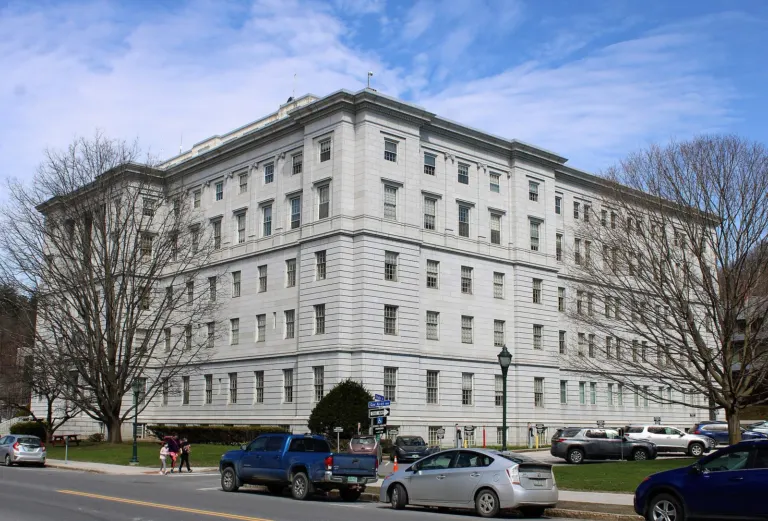
Photo: Daniel Case, CC BY-SA 3.0, via Wikimedia Commons.
Forty-one building projects in 31 Vermont downtowns and village centers will share just over $3.7 million in state tax credits this year, Gov. Phil Scott and the Agency of Commerce and Community Development announced Oct. 20. State officials expect the awards to help unlock more than $20 million in building improvements, with a heavy tilt toward apartments in walkable town centers.
The annual awards come from the Downtown and Village Center Tax Credit Program, a state tool, in law since 2005, for keeping older buildings in town centers in use. Here is a look at what was funded, how the credits work and who can apply.
Housing leads the list
Of the six projects highlighted in the governor’s announcement, five involve housing:
- Bennington, 212 Pleasant St.: A long-vacant building from 1895 will return to use with 11 market-rate apartments. Credits will help pay for façade repairs and code-compliance work.
- Hardwick, 25 South Main St.: The owner will restore six rental units in a historic mixed-use block and reopen three vacant storefronts for new locally owned businesses.
- Northfield, 57 Freight Yard Way: A vacant former Central Vermont Railway freight and lumber building, dating to about 1852, will be converted into six two-bedroom apartments.
- Springfield, 60 Park St.: The Springfield Regional Development Corporation is redeveloping the former Park Street School into 24 loft-style apartments. Credits will support a sprinkler system and an elevator for accessible entry.
- Waterbury, 88 South Main St.: A house from the 1890s will become three affordable three-bedroom workforce units.
The sixth is cultural. In White River Junction, Northern Stage, the Upper Valley’s professional theater company, will expand into the neighboring former VFW building at 97 South Main St. to run education programs and add performances. Its credits will go toward code work, including sprinklers.
“More housing is critical to helping communities thrive, particularly in our downtowns,” Scott said in the announcement, adding that over the past decade the program has leveraged more than $40 million in federal tax credits and helped create and repair more than 1,000 homes.
Housing and Community Development Commissioner Alex Farrell said the credits “help breathe new life into historic properties.” The full list of 41 projects is posted by the Department of Housing and Community Development.
How the credits work
A tax credit is not a grant check. It reduces the income tax a property owner owes, dollar for dollar, which in effect redirects tax money toward construction bills. According to ACCD, the state credit covers between 10 and 50 percent of eligible rehabilitation costs, depending on the type of work. State law sets out four types:
- A 10 percent historic rehabilitation credit for projects that also qualify for the federal historic credit.
- A 25 percent façade credit for exterior improvements, up to $25,000.
- A 50 percent code-improvement credit, with separate caps: up to $75,000 for an elevator, $60,000 for a limited-use elevator, $12,000 for a platform lift, $50,000 for a sprinkler system and $100,000 for all other code work combined.
- A 50 percent flood mitigation credit, up to $100,000.
The code credits matter most for upper floors. Many Vermont downtown blocks have empty or underused second and third stories because bringing them up to fire and accessibility codes, with sprinklers, elevators and new exits, costs more than the rent would justify. The code credit is aimed squarely at those costs.
When combined with the federal 20 percent historic credit, the total return can reach as high as 70 percent of eligible expenses, ACCD says. The two programs are separate, however. The federal credit is available only for income-producing buildings listed in the National Register of Historic Places and must be claimed over five years.
Who can apply
The state credit is open to commercial buildings and nonprofit-owned buildings that are at least 30 years old and sit inside a state-designated downtown or village center. Private homes don’t qualify, but rental properties do. Rehabilitation costs must exceed $5,000.
Awards are competitive and subject to an annual cap. Applications are due to the Department of Housing and Community Development each July 1 and are reviewed by the Vermont Downtown Board. Projects must be completed within three years of the award.
Owners can claim the state credit in one year or carry it forward for up to nine years, and they can claim it in pieces as phases are finished, for example once a sprinkler system is installed. Owners who can’t use the credit themselves, including nonprofits, can sell it to Vermont-based banks or insurance companies.
Why it matters
Vermont’s housing shortage is often discussed in terms of new subdivisions and large apartment buildings. These awards point to a smaller-scale option: filling space that already exists above storefronts and inside old schools, freight sheds and houses near Main Street, where residents can walk to shops and services.
For small-town business districts, more residents upstairs also tends to mean more foot traffic downstairs. In Hardwick, the same project that restores apartments is meant to bring three new local businesses into empty storefronts.
Building owners interested in next year’s round can contact the program’s tax credits and grants coordinator at ACCD for help determining whether a property is eligible.
Sources
- Office of Governor Phil Scott, “Governor Phil Scott Announces $3.7 Million in Downtown and Village Center Tax Credits,” Oct. 20, 2026: governor.vermont.gov
- Agency of Commerce and Community Development, “Downtown and Village Center Tax Credits: Frequently Asked Questions”: accd.vermont.gov
- 32 V.S.A. § 5930cc, Downtown and Village Center Program tax credits: legislature.vermont.gov