Fairlee’s empty Colby Block lot, a housing plan and a fight over who decides
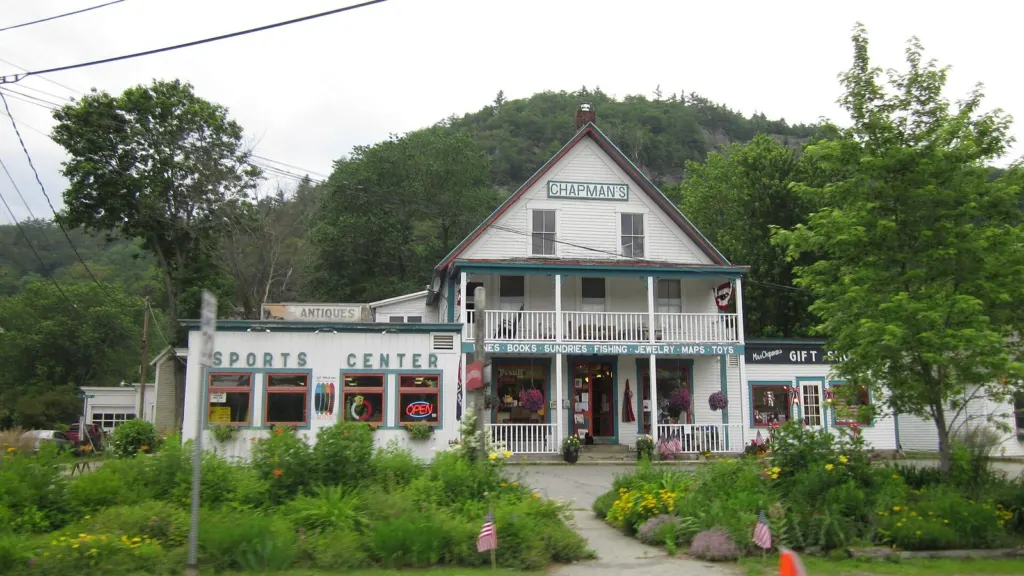
Photo: Doug Kerr, CC BY-SA 2.0, via Wikimedia Commons.
For nearly two decades, the lot where Fairlee’s Colby Block stood before it burned in 2007 has sat empty along Main Street. A plan to fill it with housing and storefronts now has selectboard approval, but a disagreement over who should decide on the project’s public financing has opened a new debate in the Orange County town.
The project, called The Denison, would put two three-story buildings on the site with 22 market-rate apartments and four commercial spaces, according to reporting by the Valley News. The investor behind it is Deecie Denison. The developer is Jonah Richard, 35, of Village Ventures, who is working with Barrett Brown and Travis Noyes, owners of Chapman’s General Store, through a company they formed called Appleseed Development.
The total cost is estimated at about $6 million.
The septic problem
The lot zoned for The Denison lacks the septic capacity needed for any serious development. The developers want to cover about $550,000 for a new septic system behind Chapman’s General Store using Vermont’s Community and Housing Infrastructure Program, known as CHIP. That amount is less than 10 percent of the project’s total cost, but Richard has told the Valley News it is the first piece investors need to see. “From a funder standpoint, usually the riskier sources need to come in first,” he said.
CHIP, created by the Legislature in recent years, is a form of tax increment financing aimed at housing. Infrastructure costs for a project are repaid over time, up to 20 years, from the increase in property tax revenue that the new development generates. To qualify, a project has to pass a “but for” test, meaning it would not happen without the public infrastructure help.
CHIP is neither a grant nor a tax increase. Appleseed would take out a bank loan, and the developers, not taxpayers, would repay it. During the repayment period, the town would keep the lot’s original tax value plus between 0 and 15 percent of the municipal share of the new tax revenue. Once the debt is repaid, the full tax revenue returns to the town. According to the Valley News, the finished project would generate roughly $79,000 a year in property taxes. The empty lot pays about $3,000 now.
Who gets to decide
The selectboard approved The Denison last fall and, at the time, promised that residents would get a town vote on whether to use CHIP. That promise is now in question.
Selectboard member Peter Berger has argued that the board itself should make the CHIP decision rather than send it to voters, pointing to Burlington and Middlebury, where municipal boards have handled similar approvals. Berger has recused himself from votes on The Denison because he and Denison are in a relationship, the Valley News reported.
Selectboard members and CHIP supporters have a specific worry: that residents who dislike The Denison will vote down CHIP altogether, which would also shut the door on using the tool for other projects in town. Richard has said that without CHIP, The Denison does not get built.
The project drew a packed room at the selectboard’s Oct. 13 meeting, where Chair Miranda Clemson ran the discussion and Town Administrator Gene Craft explained that neither CHIP nor The Denison would raise local taxes, a point some residents disputed.
Growth and services
The debate in Fairlee has touched on more than financing. Residents have raised questions about what more housing would mean for town services. Some questioned whether the town could handle more police calls. Fairlee’s police department consists of a single officer, Chief Wayne Briggs, who handles about 600 calls a year, according to the Valley News.
Richard has countered that 22 apartments would take the town from about 1,000 residents to roughly 1,035. Supporters also point to the town plan residents approved in 2020, which calls for more housing and a more diverse local economy, and to the Colby Block itself, a two-story building that held apartments and commercial space until it burned.
A test for a new tool
Fairlee’s situation is one many small Vermont towns could face. The state has pushed hard to increase housing production, and CHIP is one of the tools lawmakers created to help. But tax increment financing has historically been used by larger communities with staff who handle complex public finance. In a town of roughly 1,000 people, the question of whether the selectboard or the voters should sign off carries extra weight.
Residents who want to follow the issue can check selectboard agendas and minutes on the Town of Fairlee website or attend meetings in person.