Charlotte moves toward running its own fire and rescue service
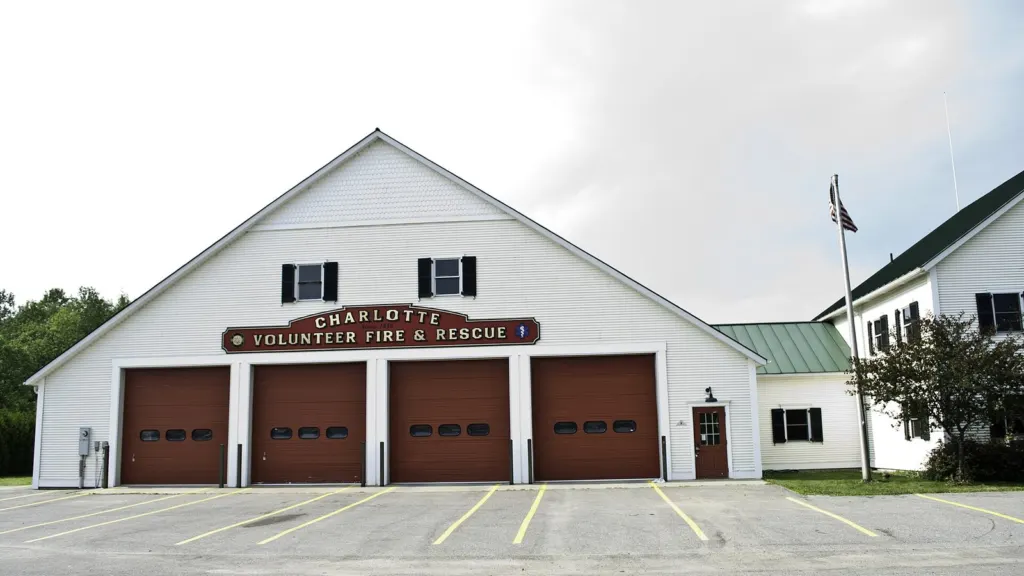
Photo: davidpinter, CC BY 3.0, via Wikimedia Commons.
Charlotte is on track to take over its fire and rescue service. At the selectboard’s Oct. 26 meeting, board members made clear that the town is preparing to bring Charlotte Volunteer Fire and Rescue Services, which has operated as an independent nonprofit, under municipal control, and that the decision is being driven by the nonprofit itself.
“It’s not a choice this time,” selectboard chair Natalie Kanner said, according to The Charlotte News. “We have been told by the nonprofit that they can no longer sustainably continue to operate CVFRS.”
A volunteer board running short
The problem is not the fire trucks or the ambulance crews. It is the volunteer structure that governs them. Dave Schermerhorn, a member of the CVFRS board, told the selectboard that its members are aging out and that finding qualified people to fill vacancies has become difficult.
That is a familiar story across small-town Vermont. Many fire and emergency medical services in the state grew up as volunteer associations, separate from town government, with their own boards, fundraising and budgets that towns help pay for. As fewer people have the time to serve on those boards, and as running an ambulance service has become more regulated and expensive, more towns have been asked to step in.
According to the town’s staff report for the meeting, a CVFRS working group has met twice to map out the timeline and process for moving fire and rescue into a municipal department, and budget and personnel discussions are ongoing. The plan is for fire and rescue to appear as a regular departmental budget for fiscal year 2028, which begins July 1, 2027.
Who decides
The selectboard’s first decision is about process. It can ask voters whether the department should come under town control, or it can make that call itself and put only the CVFRS budget before voters. Either way, residents will get a say on the money.
Lee Krohn, a selectboard member, described a sequence of steps that has to happen in order. “We’ve identified a clear critical path of key steps that need to be taken in particular order and in particular timing to make sure that we can meet the end of a decision process later this winter,” he said.
For residents, the change should be mostly invisible when they call 911. CVFRS board member Ed Sulva told the board the services provided would not be affected. What would change is on the employee side: benefits for staff would be more generous as town employees than under the nonprofit.
Other business: ballots in March, speed humps on Greenbush
The fire and rescue discussion wasn’t the only item with a long tail. After a legal review of the proposed charter amendment that would allow a hybrid town meeting, the board weighed whether public questions about reserve funds should go to voters in January or on Town Meeting Day in March. Members agreed to put all public questions on the March ballot, rather than risk decisions being made by a smaller January turnout.
“We need to do it in such a way as to give the most people possible the most say possible over what happens in the future of our town,” Kanner said.
Town clerk Mary Mead reported that Charlotte has billed more than $22 million in property taxes. About $2.9 million is going to the state, about half of what the town ultimately owes the state, and more than $12.5 million is going to the Champlain Valley School District. “Bottom line is: All is well,” Mead said.
Three speed humps are coming to Greenbush Road. D&F Excavating and Paving will build them for about $16,000, with striping and signs handled separately for roughly $4,420. The board also moved ahead on a $32,900 grant-funded project at the library that includes a generator, a propane tank and a water bottle filling station, accepting a $14,500 quote from Vermont Generator Systems for the generator work and choosing Jackman Fuels to install the propane tank for about $7,775.
Budget season starts Nov. 16
Charlotte’s first public budget meeting is set for Nov. 16 at 7 p.m. Instead of reviewing department budgets piecemeal over several regular meetings, the selectboard plans to hear all of the initial budgets in one longer session. With fire and rescue headed into the town budget for fiscal 2028, residents who want a say in what that department will cost have reason to start paying attention there.