Royalton opts in to retail cannabis by 24 votes. Here is what the narrow result allows
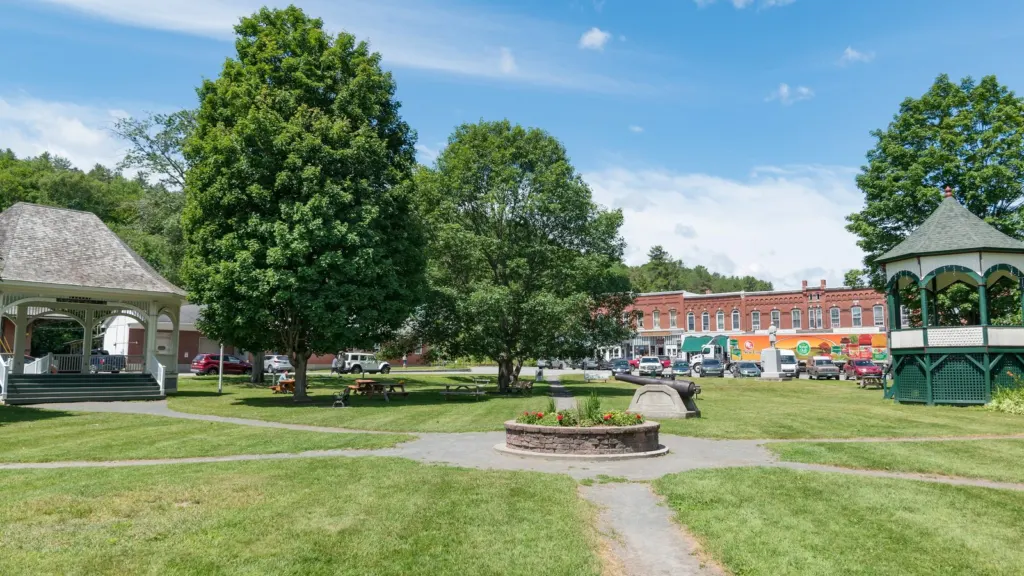
The green in South Royalton village. Photo: Ɱ / Wikimedia Commons, CC BY-SA 4.0
Royalton voters have opened the town to retail cannabis by the narrowest of margins, approving the Nov. 3 ballot question 620 to 596, about 51% to 49%, according to results reported by the Valley News.
The vote doesn’t put a store on Chelsea Street tomorrow. It clears the one hurdle state law sets for towns, and it moves Royalton into the group of Upper Valley communities that allow cannabis retailers, alongside Hartford, Bethel, Bradford, Fairlee, Randolph, Strafford, Windsor and Woodstock.
For a town split nearly down the middle, the more practical questions now are what the vote allows, what the selectboard can and can’t control, and how long a shop would take to open.
What the 24-vote margin actually decided
Vermont’s 2020 cannabis law, Act 164, left retail sales up to each town. The statute requires a town to “affirmatively permit” cannabis retailers “by majority vote of those present and voting by Australian ballot,” as the Cannabis Control Board’s municipal guidance quotes it from 7 V.S.A. § 863. Royalton’s question asked whether the town should “authorize cannabis retailers and retail portions of integrated licensee establishments.”
The opt-in only covers retail. Cultivators, manufacturers, wholesalers and testing labs never needed a town vote, according to the board, as long as they meet local zoning and hold a state license.
A later vote could reverse Royalton’s decision, but a business that is already operating would not be forced out, the Valley News noted.
What the town can regulate
Less than some residents might expect. Under the board’s guidance, towns may apply the same zoning bylaws, sign rules and nuisance ordinances they use for any business, but they “do not have the power to create special rules for cannabis establishments,” and they can’t use zoning in a way that effectively bans them.
Royalton could choose to form a local cannabis control commission, which about 40 Vermont municipalities have done, according to the board’s list. A commission would issue a local license and could suspend or revoke it, but only for violations of zoning, sign or nuisance rules. Without one, a shop still has to get every ordinary local permit, and the state won’t fully issue a license until those are in hand.
The tax money mostly goes to Montpelier. Retail cannabis carries a 14% state excise tax on top of the 6% sales tax. Towns can capture a slice only through a 1% local option sales tax, which must apply to all goods, not cannabis alone. Royalton doesn’t have one, and the selectboard has discussed putting it on the Town Meeting ballot, according to the Valley News. Our story on Essex’s local option tax warning and ratification vote shows how that process works.
Who asked for the vote, and who pushed back
The question reached the ballot at the request of Shannon Morrill, a Royalton resident who has run the Something Wicked dispensary in neighboring Bethel since 2023. She asked the selectboard in June to let voters decide, and the board agreed to add it without a petition. Morrill told the paper her Bethel shop, down a flight of stairs off Main Street, isn’t as accessible or visible as she would like, and that Vermont Law and Graduate School students make up a notable share of her customers.
The town’s public safety committee urged the board to reconsider, citing health, safety and public intoxication, and held its own public discussion Sept. 3. “I don’t think we should normalize drug use in our community,” committee chair Beth Wilhite said, as reported by the Valley News. The selectboard followed with a listening session Oct. 1.
If you’re new to how these decisions get made, our guide to Town Meeting Day and how Vermont towns govern themselves explains the Australian ballot and warned articles. We also covered what was on this fall’s ballot and, nearby, the uncertain future of Bethel’s federal fish hatchery. More town coverage is in Local News.
Even if a retailer moves in, it won’t be soon. Morrill said in September that relocating is “a big project” and she wouldn’t start looking before February or March. The next decision point for the town is whether the selectboard warns a 1% local option tax article for Town Meeting in March.
Add Vermont Daily News as a preferred source on Google (opens in a new tab)