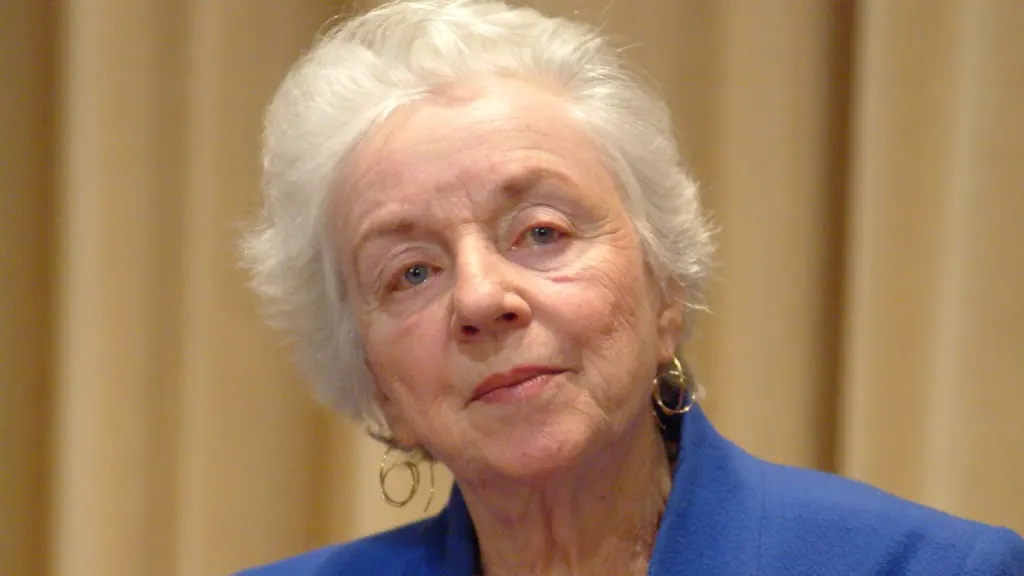
Madeleine Kunin: the refugee who became Vermont’s first woman governor
Photo: Earl McDonald, NARA Staff, public domain, via Wikimedia Commons.
Madeleine May was born in Zurich, Switzerland, in 1933. Her family was Jewish, and in 1940, with the threat from Nazi Germany growing, her widowed mother brought her and her brother to the United States. They settled in New York and Massachusetts.
She studied history at the University of Massachusetts and journalism at Columbia, and worked as a reporter for the Burlington Free Press. After marrying Arthur Kunin, a Burlington physician, she raised four children and became active in local politics.
From the House to the governor’s office
Kunin was elected to the Vermont House in 1972, served as lieutenant governor from 1979 to 1983, and lost her first race for governor in 1982 to Richard Snelling. In 1984 she won, becoming Vermont’s first woman governor and the first Jewish woman elected governor of any state.
She served three two-year terms, from 1985 to 1991. Her administration expanded early childhood programs, created the state’s affordable housing trust fund, now the Vermont Housing and Conservation Board, and passed Act 200, a growth management law that set off a fierce fight over local planning.
After Montpelier
Kunin later served as deputy secretary of education under President Bill Clinton and as U.S. ambassador to Switzerland, the country of her birth. Back in Vermont, she taught at the University of Vermont and Saint Michael’s College, founded the Institute for Sustainable Communities and wrote several books, including “Pearls, Politics and Power,” about women in public life.
She has remained a familiar voice in Vermont politics and a mentor to women running for office.