Vermont Tortilla’s new owners got through a year-long move. Now they’re rebuilding
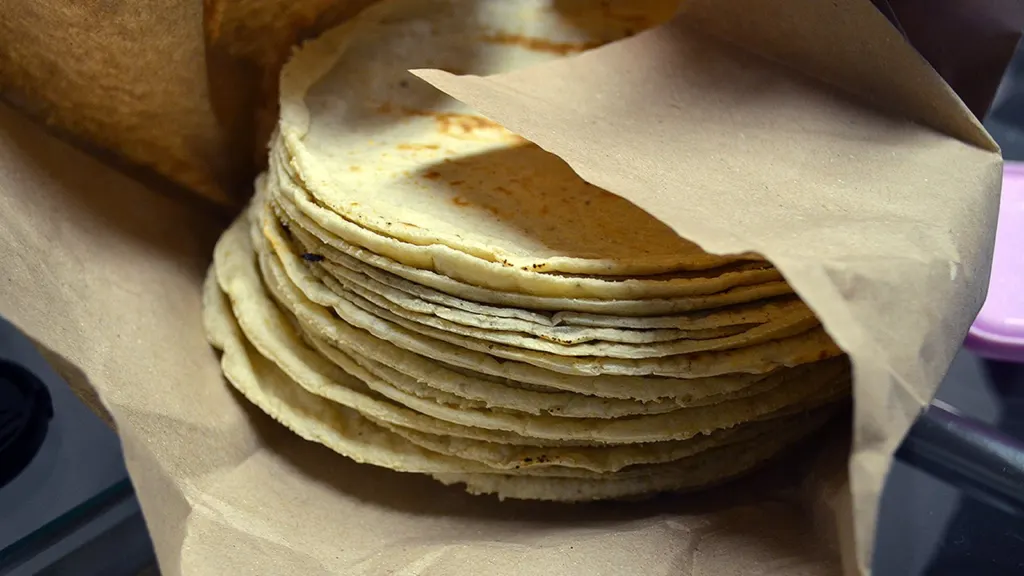
Fresh corn tortillas. Photo: ProtoplasmaKid, CC BY-SA 3.0, via Wikimedia Commons.
Leyland Papa and Lindsey West bought Vermont Tortilla Company in June 2025 knowing they would have to move it. The lease on the company’s longtime Shelburne space ran out that August. They did not expect the move to take a year and cut sales roughly in half.
The organic corn tortilla maker is now back in production at 30 Boston Court in Essex, with a staff of three, after what Papa described to Seven Days as an “exhausting” and expensive search and permitting process. He had hoped to reopen July 1. Tortillas started coming off the line again at the end of August.
A small company with a specific process
April and Azur Moulaert founded Vermont Tortilla about a decade ago and built it around a method most grocery-store tortillas skip. The company cooks organic corn with lime, lets it steep and stone-grinds it into fresh masa, the traditional process called nixtamalization. The finished tortillas are made from corn, water and slaked lime, with no preservatives or conditioners, according to the company’s website.
The corn comes from just across Lake Champlain. Vermont Tortilla buys certified organic corn from Adirondack Hay and Grains in Essex, New York, in the Champlain Valley. Along with tortillas, it sells fresh masa to cooks and restaurants who want to press their own.
That kind of product doesn’t scale like a factory tortilla, and the owners don’t pretend it does. The company describes itself as operating “on a human scale,” selling to home cooks, food trucks and restaurant kitchens.
Water was the sticking point
Nixtamalization takes a lot of water. The corn is cooked, soaked and washed before grinding, and that need shaped the whole search for a new building.
Papa and West spent months working on a space in Hinesburg. That plan fell apart over the town’s water allocation limits, which couldn’t accommodate the 500 gallons a day the business had requested, Papa told Seven Days.
Essex worked out, but not easily. Getting the Boston Court space’s water allocation raised from 200 to 450 gallons a day required its own permitting process, which Papa said was just as expensive and draining as the one before it.
He sees the experience as typical rather than unlucky. “This isn’t some unique thing for me,” Papa said. “This is the crux of what is going on when they say, ‘We need to fix small business’ or ‘Why are businesses leaving?'”
It is a familiar complaint among Vermont food makers. Commercial kitchens and small production facilities need water, wastewater capacity and, often, upgraded power, and many of the state’s village centers and industrial parks were not built with that in mind. Lawmakers and economic development officials have talked for years about permitting reform and infrastructure investment as a way to keep small manufacturers in the state. For a three-person tortilla shop, the cost of that gap shows up as months without sales.
Rebuilding
Papa estimated the business is now running at about half the annual sales it had when he and West took over. To rebuild, they are leaning on direct sales. The company now ships boxes of frozen tortillas nationwide, alongside its wholesale accounts with area stores and restaurants.
The Essex facility isn’t set up for walk-in shoppers, but customers can order ahead and pick up by appointment. Wholesale buyers can arrange weekly volume through the company’s site.
Taking over a beloved small food brand is hard in the best conditions. Customers expect the product to taste exactly the same, the margins are thin and there’s little room for a bad quarter. Papa and West took on all of that plus a forced move in their first months, then spent most of a year with production stalled.
The tortillas are back on shelves now. Whether the business gets back to where it was will depend on how quickly the old wholesale customers return and whether the mail-order boxes catch on beyond Vermont. For the owners, the hardest year may already be behind them.