Elisha Otis: the Halifax farm boy who made elevators safe
Photo: Unknown authorUnknown author, public domain, via Wikimedia Commons.
Elisha Graves Otis was born on a farm in Halifax, a hill town in Windham County, in 1811. He left Vermont as a young man and worked a series of jobs, as a wagon driver, mill builder and mechanic, in New York state and elsewhere, often struggling financially.
In 1852 he was working at a bedstead factory in Yonkers, N.Y., where he needed to move heavy equipment to an upper floor. Hoisting platforms existed, but they were dangerous: if the rope broke, the platform fell. Otis designed a safety brake using a spring and toothed guide rails. If tension on the rope was lost, the spring forced catches into the rails and stopped the platform.
The demonstration
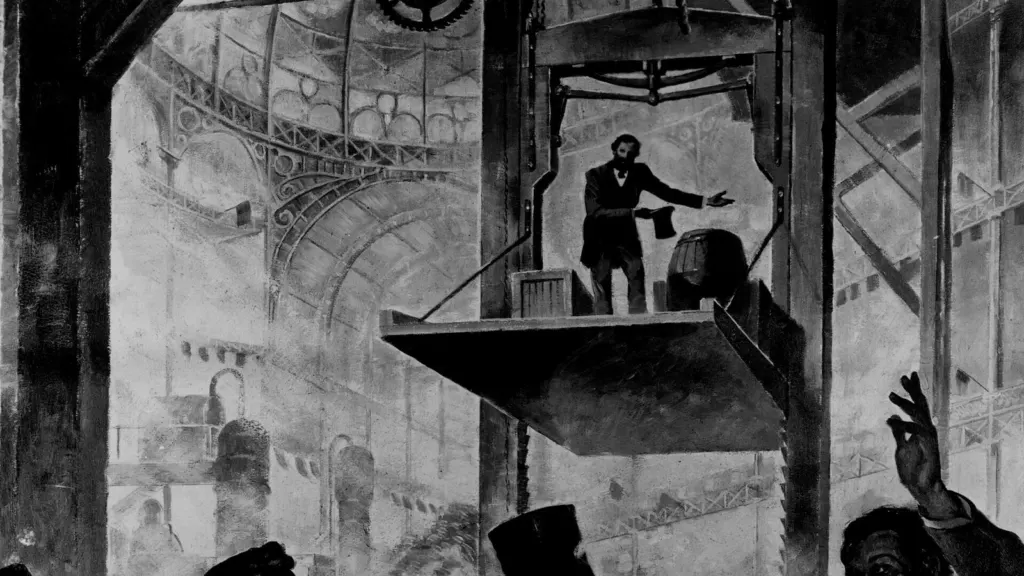
In 1854, at the Exhibition of the Industry of All Nations in New York’s Crystal Palace, Otis rode a platform high above the crowd and had the rope cut. The platform dropped a few inches and stopped. “All safe, gentlemen, all safe,” he is said to have announced.
The first passenger elevator using his brake was installed in 1857 in the E.V. Haughwout Building in Manhattan.
A company and a skyline
Otis died in 1861, before the elevator changed cities. His sons built the business into the Otis Elevator Company, which installed elevators in the Eiffel Tower, the Empire State Building and countless other buildings. Without safe elevators, tall office buildings would not have been practical.
Halifax remains a rural town of a few hundred people, and its connection to Otis is a point of local pride. The company that carries his name is still one of the largest elevator makers in the world.