Vermont state workers must be in the office three days a week starting Jan. 10
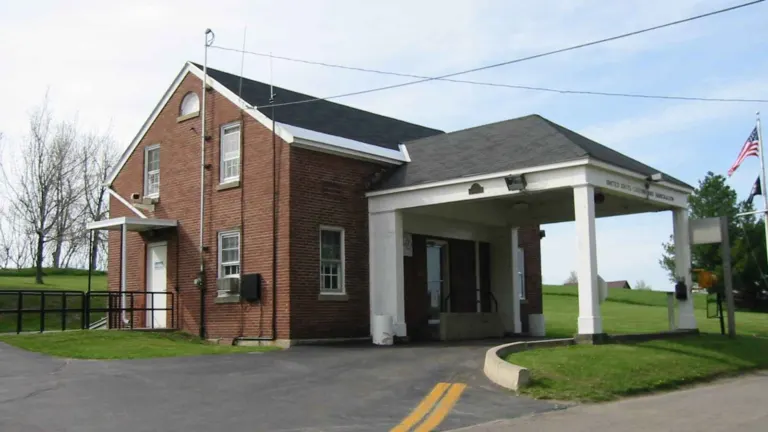
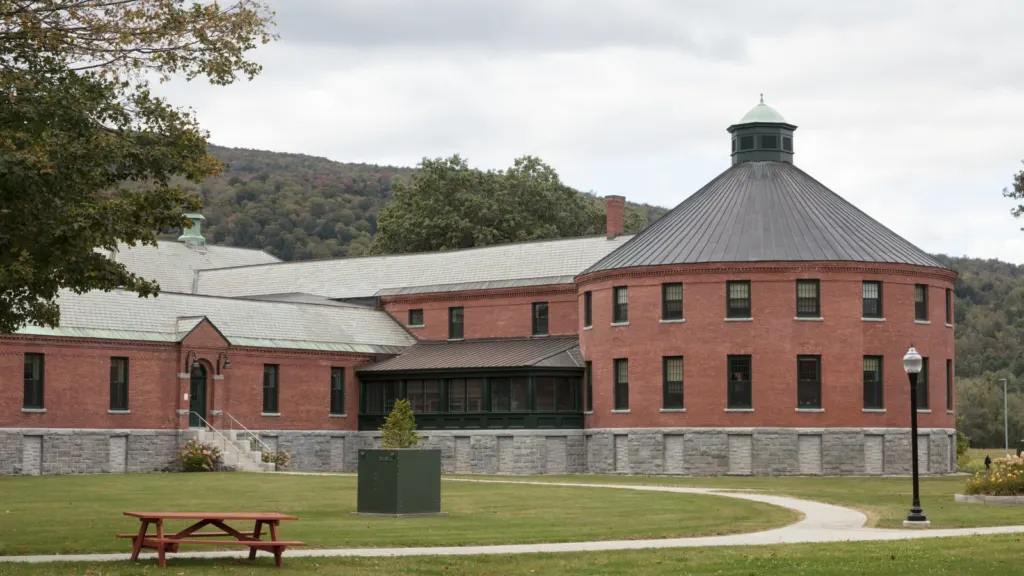
Part of the Waterbury State Office Complex, the former Vermont State Hospital, in 2017. Photo: Carol M. Highsmith / Wikimedia Commons, public domain
Vermont’s executive branch workers have six weeks left under their current telework arrangements. Starting Jan. 10, 2027, state employees must be in the office at least three days a week, and every existing remote-work agreement ends that day, the Scott administration has told staff.
The date closes out a fight that ran more than a year, from a governor’s press conference to the Vermont Labor Relations Board to the state Supreme Court. For the thousands of employees who report to the Waterbury State Office Complex, offices in Montpelier and district offices around the state, it means new commutes, new telework requests and, for some, decisions about child care and where to live.
Human Resources Commissioner Kristin McClure set out the timeline in a Nov. 13 email to staff, VTDigger reported Friday. Remote-work arrangements will be “null and void” as of Jan. 10, she wrote. “The decision to require some level of in person work is not based on individual performance or productivity.”
How the rule got here
The court record lays out the history. In August 2025, Gov. Phil Scott announced at a press conference that he wanted state workers back in the office, and Secretary of Administration Sarah Clark told employees the state wanted “a more consistent and balanced hybrid work standard,” with a minimum of three days on site. In September 2025, the state told the Vermont State Employees’ Association the rule would take effect Dec. 1, 2025, and that it did not need to bargain because the existing telework policy already gave managers that power.
The union disagreed. In April 2026, after hearings in February, the Labor Relations Board ruled that the state had changed a bargained policy without negotiating. The board found the state had “not offered any evidence” that existing telework arrangements had hurt its goals of connection and collaboration.
The Vermont Supreme Court reversed that ruling unanimously on Sept. 25. In its opinion in Vermont State Employees’ Association v. State of Vermont, 2026 VT 43, written by Associate Justice Nancy Waples, the court held that the telework policy lets the state end telework agreements “with or without cause” and does not require it to prove an operational need first. “The Governor’s assessment of the operating needs of his administration was reasonable, and it is not up to this Court to assess the wisdom of that decision,” Waples wrote.
How many workers it touches
The state’s own survey, described in the court’s opinion, gives a sense of scale. Of the employees who answered, 3,663 said they teleworked at least one day a week and 3,027 said they did so three or more days a week. Of those, 2,523 said they faced some kind of obstacle to coming in more often.
VTDigger, citing an earlier state survey, reported that before 2020 only about 9% of the workforce worked remotely more than one day a week. The state has about 8,000 employees.
Steve Howard, executive director of the 6,000-member union, told VTDigger he expects a substantial number of resignations over the coming months as commutes, housing and child care become harder to manage. Department of Human Resources spokesperson Ted Fisher said the department had “seen nothing that would indicate the potential for large-scale departures.”
What workers can still ask for
The rule does not end telework outright. Under guidance McClure sent staff, employees can request to work remotely up to two days a week, and approval is at the discretion of supervisors. Without an approved request, staff must be on site for all of their working hours. When the standard was first rolled out last year, it required employees to file a new request through an online form, and it allowed exceptions to the three-day minimum only “if all job duties can be performed remotely, and compelling reasons” exist, according to the court’s summary.
The change lands as the administration is also working on other big internal projects, including a troubled Workday payroll and finance overhaul now aimed at a February restart. Lawmakers who have criticized the mandate, including House Majority Leader Lori Houghton, D-Essex Junction, will be back in Montpelier when the 2027 session opens Jan. 6, four days before the office rule takes effect.
The rule takes effect Jan. 10. Employees who want to keep working remotely up to two days a week need an approved request from their supervisor by then. For more on state government, see our Politics & State Government coverage.
Add Vermont Daily News as a preferred source on Google (opens in a new tab)