GlobalFoundries marks 6 megawatts of solar and a 16-megawatt battery in Essex Junction
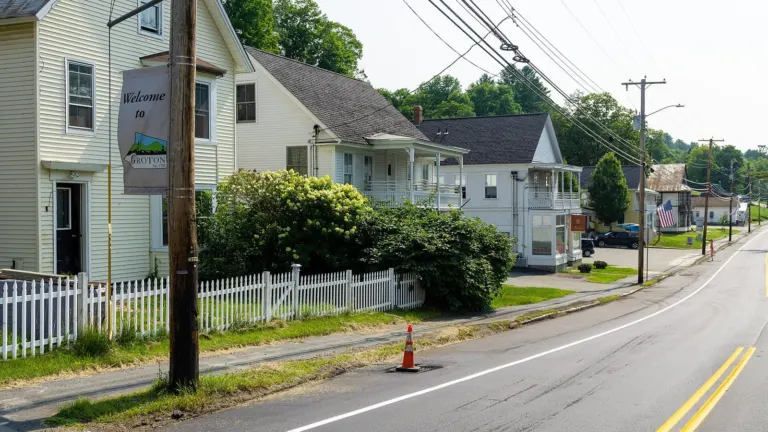
Downtown Essex Junction, where GlobalFoundries marked a new solar and battery project at its nearby campus. Photo: Mfwills, CC BY-SA 3.0, via Wikimedia Commons.
GlobalFoundries marked a clean-energy milestone at its Essex Junction semiconductor plant on Oct. 5, formally recognizing the delivery of about six megawatts of on-site solar arrays and a 16-megawatt battery storage system, the company said in a statement that day.
Gov. Phil Scott, Agency of Natural Resources Secretary Julie Moore, and the project developers, Encore Renewable Energy and Lightshift Energy, joined GlobalFoundries leaders for the ceremony. The company said the systems will come fully online in the coming months and are designed to stay in service for more than 20 years. Partners included state regulators, the City of Essex Junction, VELCO and Green Mountain Power.
“This site has been in the business of firsts for almost 70 years, and today we’re celebrating a new way of powering the semiconductor innovations we make,” said Dan Colello, vice president and general manager of Fab 9. He said the battery had been designed to work with the plant’s sensitive manufacturing equipment, “where power quality is critical.”
WPTZ reported that the six megawatts of solar span two projects in Essex Junction and Williston, with the 16-megawatt battery at the Essex Junction campus. Vermont Business Magazine, which covered the same event, said the solar includes a new field on the Essex Junction side near Maple Street and an existing solar field in Williston near Mountain View Road. Encore founder and president Chad Farrell said more than 30 acres, in spaces that were once heavily used and then largely forgotten, are now producing power.
The official release does not put a dollar figure on the work. WPTZ, citing the company, reported that GlobalFoundries will invest more than $40 million over the system’s lifetime. Vermont Business Magazine described the work as a $40 million investment. WPTZ also reported that the Vermont campus can draw 35 to 45 megawatts depending on the season, and that the battery is meant to charge when demand is lower and supply the fab for up to four hours at peak times.
Jenny Robbins, GlobalFoundries’ senior director of facilities, told WPTZ that the plant measures power disturbances in cycles, not seconds. “There are 60 cycles in a second and even a small dip in or sag in voltage for a few cycles can impact the equipment on campus,” she said.
Michael Herbert, managing partner and co-founder of Lightshift, called the installation “Vermont’s largest battery” and said it should cut peak demand, delay some transmission and distribution upgrades and make room for more renewable power on the grid. Officials closed a breaker in a symbolic ceremony Monday, WPTZ reported, while the company and the station both said full operation is still months away.
Scott, in the company’s release, said that “when we do it right, like everyone has done on this project, it helps us achieve our economic and environmental goals faster.” Speaking to WPTZ, he framed the spending as a sign the company is staying put: “This is an industry where companies can invest almost anywhere in the world. But they’re once again investing right here in Vermont.”
Add Vermont Daily News as a preferred source on Google (opens in a new tab)