Vermont study finds big investors bought just 0.36% of homes sold since 2022
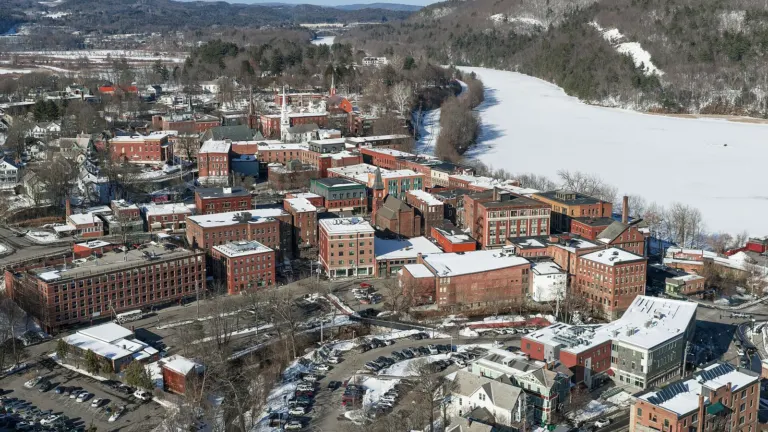
Newport, on Lake Memphremagog, in late October. Photo: Ascended Dreamer / Wikimedia Commons, CC BY 4.0
Big investment firms are not buying up Vermont’s single-family homes, according to a state study delivered to lawmakers this month. Out of 29,944 sales of single-family homes and duplexes recorded from January 2022 through December 2025, just 108, or about 0.36%, went to buyers the state classed as high-frequency purchasers.
The 2026 Corporate Purchase of Homes Report, dated Nov. 15 and submitted by the Department of Housing and Community Development, concludes that the department “found no evidence of substantial private equity or corporate acquisition” of those homes. It recommends no new regulation for now.
The Legislature asked for the study in Section 12 of Act 179, this year’s housing law. The question behind it has been part of Vermont’s housing debate for months, including in the governor’s race, where Phil Scott and Amanda Janoo offered different explanations for why homes cost so much.
How the state counted
Vermont has no easy way to link the LLCs and other entities that appear on town grand lists back to their real owners, the report says, so the department turned to Property Transfer Tax returns kept by the Department of Taxes. Those returns capture every sale. Analysts kept fee simple sales of single-family homes and duplexes, dropped tax-exempt buyers such as governments and nonprofits, and flagged any buyer with multiple purchases in a single calendar year.
Fourteen individuals or entities met that bar over the four years. Every one of them bought at least four homes in a year, and most stopped at four or five. Eight are companies and six are individuals; the report does not name them.
The flagged purchases were not concentrated in one type of home. In 60 of the 108 sales, the seller had used the house as a primary residence, the report says; the rest were sold out of investment, rental or other uses.
One Newport builder made up 40% of the count
One buyer, listed as Entity A, accounted for 43 of the 108 purchases. The report describes it as a home builder and remodeler based in Newport, and Vermont Public identified the company as Tanguay Homes.
Its pattern looks like renovation, not landlording. Of the 25 homes Entity A both bought and sold during the study period, it held them for an average of 208 days and resold them for an average gain of $109,947, according to the report’s transaction table. Some were bought for very little: one parcel changed hands for $7,500 and resold six weeks later for $40,000. All of the company’s deals were in the Northeast Kingdom and Franklin County.
The department points to the age of the region’s housing as context. Citing the state’s 2025 Housing Needs Assessment, it notes that about a quarter of homes in Orleans County were built before 1940 and the median home there dates to 1976, conditions that make a region a likely place for rehab work.
“We are not seeing any significant buying either by private equity, outside corporations, or even individuals here in Vermont,” Housing Commissioner Alex Farrell told Vermont Public.
What the study can’t see
The authors are upfront about the gaps. The data does not separate year-round homes from seasonal ones, so camps and short-term rentals counted as residences are included. More important, it cannot tell when one owner buys through several LLCs, which means a buyer spreading purchases across entities would not show up as high-frequency. The department says it is still working with the Department of Taxes on that problem.
The report also notes why Vermont may be a poor fit for the biggest players. National research it cites from Realtor.com found that investors owning 100 or more single-family homes made up 1.7% of U.S. purchases from 2015 to 2025, and that they favor the Sun Belt and Midwest, where inventory is larger and prices lower.
Federal limits start in January
Large investors will face new national rules soon regardless. The federal 21st Century ROAD to Housing Act, signed in July, generally bars for-profit entities that control 350 or more single-family homes from buying more, starting Jan. 7, 2027, and requires them to report their holdings to the U.S. Department of Housing and Urban Development, according to the report. New York this year required covered investors to wait until a home has been listed for 90 days before buying it.
For Vermont, the department recommends a lighter step: a report to the House General and Housing Committee and the Senate Economic Development, Housing and General Affairs Committee twice a year, using the same transfer tax data, so lawmakers can spot a change in buying patterns early.
That recommendation lands as the Legislature prepares for a session that opens Jan. 6, with housing supply again expected to be near the top of the agenda. Recent state funding rounds, including $59 million in VHFA housing subsidies and a $30 million rental tax credit round, are aimed at building more homes rather than limiting who buys them. More coverage is in our Real Estate section.
Add Vermont Daily News as a preferred source on Google (opens in a new tab)