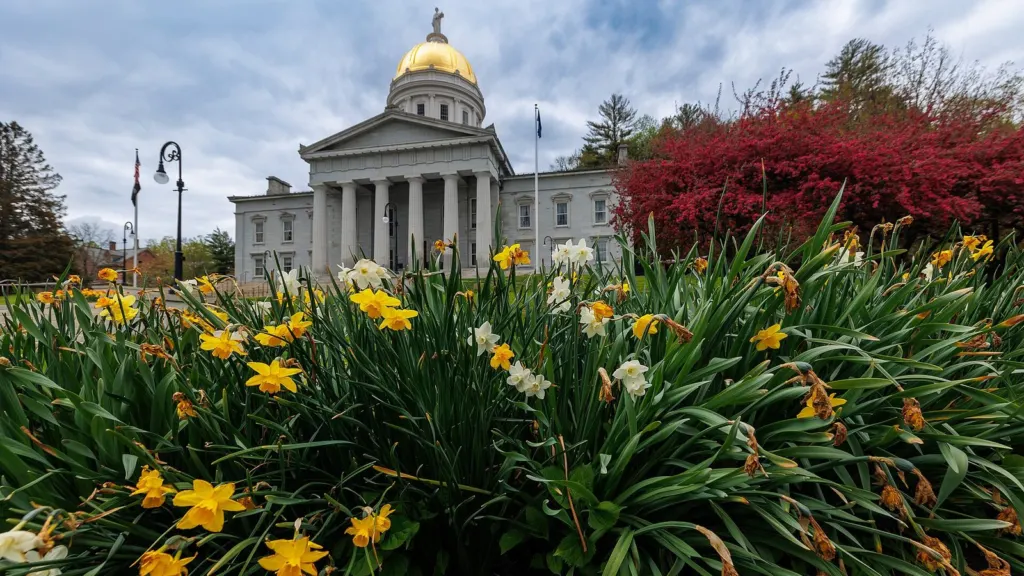
Scott and Janoo offer two different diagnoses of Vermont’s housing crisis
Photo: Kenneth C. Zirkel, CC BY 4.0, via Wikimedia Commons.
With Election Day on Nov. 3, Vermont voters choosing a governor are also choosing between two different explanations of why housing here costs so much. Republican Gov. Phil Scott, seeking a sixth term, says the state simply hasn’t built enough homes. His Democratic/Progressive challenger, economist Amanda Janoo, puts more of the blame on who owns the homes that already exist.
The stakes are not abstract. One in five Vermonters struggled to pay rent or a mortgage in the past year, according to recent Vermont Public polling, and more than 4,800 people in the state were experiencing homelessness as of September. A detailed comparison of the two platforms by Vermont Public reporter Carly Berlin lays out how far apart they are.
Scott’s argument: supply first
Scott, who worked in construction before entering politics, frames housing as a supply problem that touches nearly everything else, from shrinking school enrollment to strain on the health care system. His refrain is that Vermont doesn’t need more taxes, it needs more taxpayers. “We need more housing, and there’s no governor who has done more for housing than me,” he said at Vermont Public’s gubernatorial debate.
He points to two programs created on his watch. The Vermont Housing Improvement Program, known as VHIP, gives small grants to fix up rundown apartments, and in return landlords must rent the units below market rates for five to 10 years. The Community and Housing Infrastructure Program, or CHIP, lets developers borrow for roads, sidewalks and sewer lines against the future tax revenue of a housing project.
Both programs put public money behind private landlords and builders. That is a shift from the approach that dominated before Scott, which mostly funded nonprofits to build homes with permanent affordability requirements. Scott’s administration has still overseen hundreds of millions of dollars for that kind of housing, much of it federal pandemic aid, but the governor argues funding alone won’t close the gap.
The other half of his pitch is permitting. Scott has pushed the Legislature to loosen development rules, most recently those covering construction near wetlands, and he has a personal story about it: as a young man, he needed an Act 250 permit to build a motorcycle shop in Morristown, and the delay and cost killed the project.
Critics in the Democratic-led Legislature say the administration could do more inside state government. Senate Majority Leader Kesha Ram Hinsdale said Scott’s team could speed up the permits it controls directly. “You have to make government work for people,” she said.
Janoo’s argument: tax the investment properties
Janoo, a political newcomer who rents an apartment in Burlington, talks less about the shortage and more about what she calls the “financialization” of housing. Her signature proposal would restructure property taxes to charge more on second homes, luxury estates and short-term rentals, and use that money to lower the property tax burden on Vermonters who live in their homes year-round.
“We really need to limit private equity and large corporate ownership of the housing stock,” Janoo said during Vermont Public’s primary debate in July. Over the campaign she has narrowed the target, saying she wants higher rates on “luxury second homes” and “commercial vacation rentals,” not on “modest family camps” or long-term rentals. She also supports simpler permitting with “strong environmental protections” and more investment in permanently affordable housing.
She hasn’t said what the new rates would be. Janoo has said Vermont lacks the property-level data to set them or estimate how much they would raise.
What the numbers show about corporate buyers
Second-home taxes poll well in Vermont. The evidence that large corporations are buying up the state’s homes is thinner.
State tax data counted about 7,400 corporation-owned residential properties in 2025, roughly 3% of all residences. That category is broad and includes properties held by LLCs, nonprofits and government bodies. The Department of Housing and Community Development is studying the question, and in a preliminary look at more than 20,000 single-family and duplex sales from 2022 through 2025, Commissioner Alex Farrell found just over 60 cases in which a buyer bought five or more properties in a year. The most active buyer was a Newport remodeling company that renovated homes and resold them to people living in them.
Vermont did see a spike in investor purchases in 2021, when interest rates were low. Janoo argues the state should act before large owners consolidate more of the market.
Polls close at 7 p.m. on Tuesday. Vermont voters who received a mailed ballot can return it to their town clerk by the close of polls on Election Day.