Rock of Ages and the granite business that built Barre
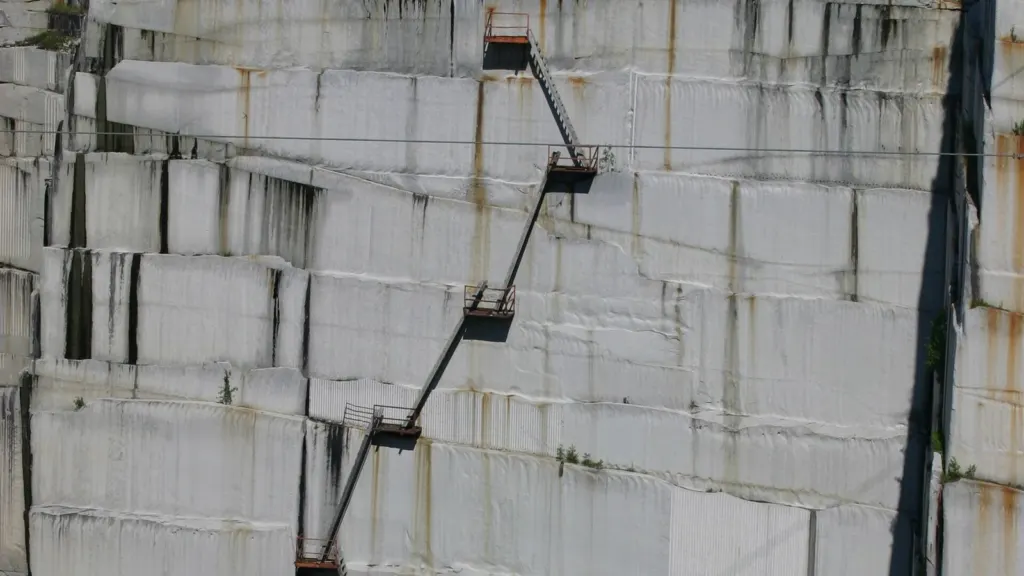
Photo: National Institute for Occupational Safety and Health (NIOSH, public domain, via Wikimedia Commons.
Barre calls itself the Granite Center of the World, and for more than a century the claim has held up. The fine-grained gray stone under Millstone Hill in Barre Town, known as Barre Gray, is prized for monuments because it takes a polish and holds carved detail.
Quarrying started in earnest after the railroad arrived in the 1870s. Skilled stone carvers came from Scotland and from northern Italy, especially the marble and granite towns around Carrara, and they made Barre one of the most ethnically diverse places in Vermont. Their politics came with them; the Socialist Labor Party Hall on Granite Street, built in 1900, is a National Historic Landmark.
Rock of Ages
Rock of Ages formed in the early 1900s and became the dominant quarrier on the hill. Its main quarry in Graniteville is one of the deepest dimension-stone quarries in the world, approaching 600 feet. The company runs a visitor center where people can look down into the pit and watch the manufacturing division cut and polish stone.
Rock of Ages has changed hands several times. It was acquired by the Swenson Granite company, part of the Polycor family of stone companies, in 2011.
Hard work, long legacy
Granite dust took a terrible toll on early workers, and silicosis killed many carvers young. Ventilation rules eventually changed that. Hope Cemetery, on the north side of Barre, is filled with elaborate monuments carved by the workers themselves, and it has become one of the best places to see what the industry produced.
The industry is smaller now, but sheds and monument makers still line the roads around Barre, and the stone still ships across the country.