Molly Gray wins back the lieutenant governor’s office
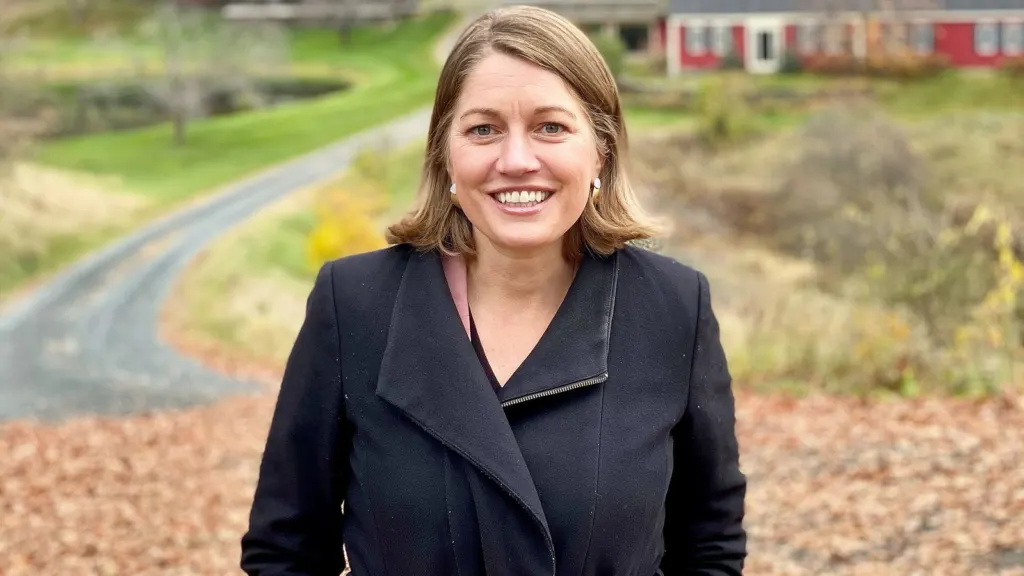
Molly Gray in Vermont during her earlier term as lieutenant governor. Photo: LTGVT, CC BY-SA 4.0, via Wikimedia Commons.
Molly Gray is going back to the lieutenant governor’s office. The Democrat beat incumbent Republican John Rodgers on Tuesday night by a wide margin, reclaiming the job she held from 2021 to 2023 and ending a campaign that turned sharply personal in its final weeks.
Rodgers conceded about two and a half hours after polls closed, by email from his home in Glover, where he was with family and staff. Early returns had Gray at roughly 60 percent or more of the vote, with the count still underway when he called it.
“Tonight, the voters of Vermont have made their decision, and while this isn’t the outcome we had hoped for, I respect their choice and congratulate Molly Gray on a hard-fought campaign,” Rodgers said in a statement. “I wish her the best as she prepares to serve the people of Vermont.”
“The Vermont way”
Gray, a human rights lawyer, spoke to supporters at a Vermont Democratic Party event in Burlington. She thanked Rodgers for his work on behalf of rural Vermont and for conceding graciously, and she pointed out that she ran statewide without taking “a single cent” of corporate PAC money.
“I feel like we won this race the Vermont way,” she said. “We kept things positive. We focused on addressing our biggest challenges. We shared all sorts of ideas to address housing and health care.”
“I know the responsibility that comes with this office,” she added. “I promise to show up starting tomorrow morning, rolling my sleeves up, preparing with urgency and with experience for what comes ahead.”
A rematch of sorts with her own past
Gray won the office in 2020 and left after one term to run for the U.S. House in 2022, a race she lost in the Democratic primary to Becca Balint. She then became executive director of the Vermont Afghan Alliance, a Burlington nonprofit that helps Afghan refugees resettle.
Rodgers, a stonemason and cannabis farmer from the Northeast Kingdom who served in the Legislature for years, won the lieutenant governor’s race in 2024. In a statement after his concession, he called serving in the post “one of the greatest honors of my life” and described himself as “a fifth-generation Vermonter, a farmer, a small business owner” who tried “to bring a little common sense to Montpelier.”
Where they split
Both candidates said affordability was the state’s biggest problem. Their answers were far apart. Gray supports higher taxes on high-income residents and second-home owners to ease property taxes for homeowners and to pay for universal, publicly funded primary care. Rodgers opposed new taxes and argued for spending restraint and lighter regulation on business.
They also saw the job differently. Rodgers emphasized constituent help, using the office to solve problems for individual Vermonters. Gray said she would use it to push for broader changes in health care and to speak out against what she called federal overreach by the Trump administration.
Rodgers was blunt about the national mood on Election Day. “I think Trump’s an anchor on everybody that has an R beside their name,” he told Seven Days before polls closed. He also questioned Gray’s primary care plan. “For somebody to run a whole campaign on something that can’t be delivered, I just think that’s being dishonest with Vermonters,” he said.
A rough final stretch
Trailing in the polls and in fundraising, Rodgers went after Gray hard starting in late September. He argued she had treated the office as a springboard to Congress the first time. He criticized her comment that large dairy farms “may not be viable” in Vermont, which she said was taken out of context. And his campaign released documents about Four Corners Farm in South Newbury, where Gray grew up and where her family still lives, describing substandard housing for seasonal workers. The farm resolved the violations and paid a $1,728 fine in early 2025.
Gray, who lives in Burlington and isn’t involved in running the farm, called the attack “disgraceful” and “a new low.” She pointed to license violations at Rodgers’ own cannabis farm in Glover, for which he agreed to pay a $2,500 fine.
The rest of the ticket
Elsewhere on the ballot, Balint won a third term in the U.S. House, beating Republican Gerald Malloy and four other candidates. Deputy State Auditor Tim Ashe won the open auditor’s seat. Treasurer Mike Pieciak, Secretary of State Sarah Copeland Hanzas and Attorney General Charity Clark each won a third term.