Church Street Marketplace: how Burlington’s pedestrian mall keeps its stores
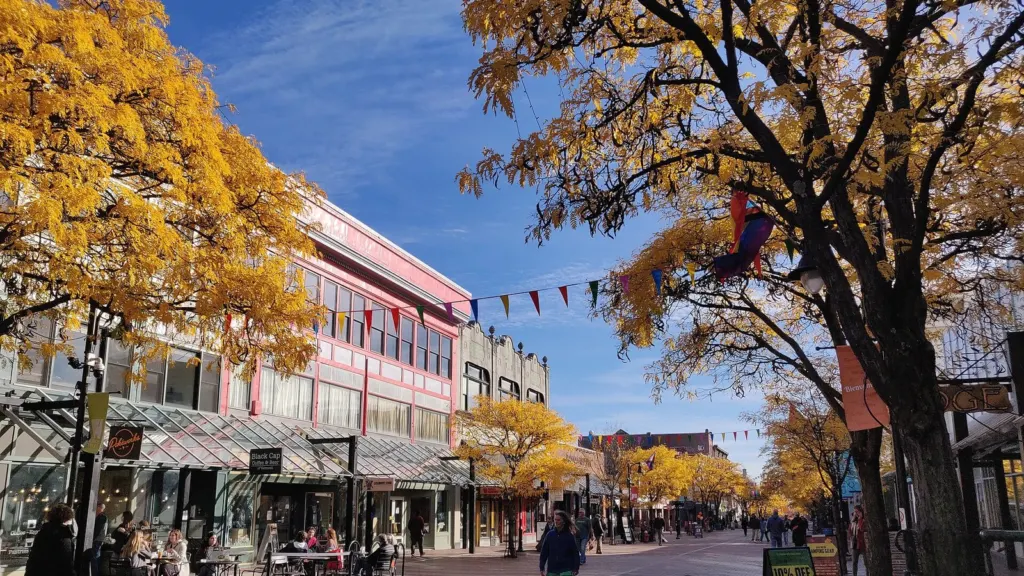
Photo: Sdkb, CC BY-SA 4.0, via Wikimedia Commons.
Many American cities closed downtown streets to cars in the 1960s and 1970s, hoping to compete with suburban malls. Most of them later reopened those streets after the stores left. Burlington’s Church Street Marketplace is one of the exceptions.
The city closed four blocks of Church Street, from Main Street to Pearl Street, and opened the brick-paved marketplace in 1981. The Unitarian church at the north end and City Hall near the south end frame the street.
A district that manages itself
Part of the reason it has lasted is structure. The marketplace is run by a special district with its own commission and staff, funded in part by assessments on property owners along the street. The district handles maintenance, events, marketing and street vendors. That gives Church Street something closer to the management of a private mall, with someone responsible for keeping it clean and busy.
The marketplace is also helped by geography. The University of Vermont and Champlain College are a short walk away, Lake Champlain is down the hill, and Burlington is the state’s largest city and its main shopping destination.
Recent pressures
The street has been through rough stretches. The pandemic emptied storefronts, and the redevelopment of the former Burlington Town Center mall at the south end left a large hole for years. Concerns about public safety, homelessness and drug use downtown have been major topics in city politics.
Local businesses, from long-standing shops to newer restaurants, have pushed for more events and a stronger police and outreach presence. Summer evenings and the holiday season still bring the crowds that make Church Street work.