BETA Technologies posts record $17.7 million quarter and a $119.1 million loss
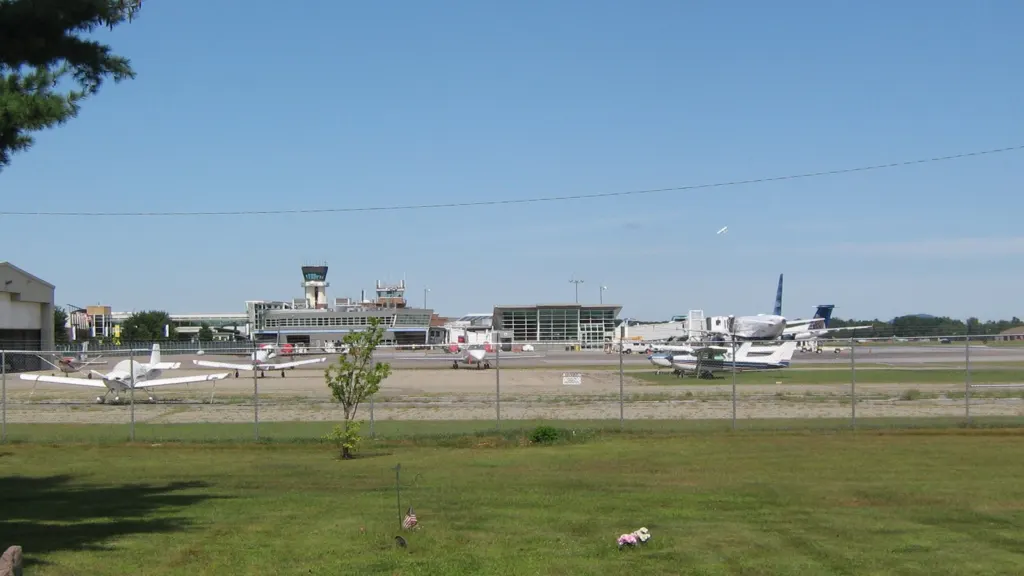
The general aviation ramp and passenger terminal at Burlington International Airport in South Burlington, where BETA Technologies is based. Photo: Fancy-cats-are-happy-cats, public domain, via Wikimedia Commons.
BETA Technologies, the South Burlington electric-aircraft company, said Nov. 3 that third-quarter revenue nearly doubled from a year earlier, to a company-record $17.7 million, as it also posted a $119.1 million net loss and said it had received FAA authorization to fly prospective customers on its A250 aircraft.
In its third-quarter results, BETA reported revenue of $17.672 million for the three months ended Sept. 30, up 98% from $8.918 million a year earlier, and said that figure beat the company’s guidance and was entirely organic. Adjusted EBITDA was a loss of $97.4 million, compared with a $67.6 million adjusted loss in the year-ago quarter. Founder and CEO Kyle Clark called it the company’s strongest revenue quarter since inception and said BETA was “exceeding the targets we set at the beginning of 2026.”
The same release said the A250 became the first electric vertical-takeoff-and-landing aircraft to receive a Federal Aviation Administration Special Airworthiness Certificate for market surveys, allowing demonstration flights with customers on board before type certification. That authorization builds on flight testing of the A250 and on BETA’s existing CX300 market-survey authorization, the company said. BETA also said its fleet had surpassed 250,000 nautical miles flown, ahead of a year-end target, and that its charging network had grown to 168 sites.
Commercial aircraft backlog rose to just over $4.0 billion, the company said, representing 1,040 aircraft in firm and option orders backed by financial commitments and topping a year-end goal. BETA also said it had launched 6 of the 7 selections in the FAA’s eVTOL Integration Pilot Program, with missions that included moving medical supplies in North Carolina, emergency-response equipment in Texas and cancer medicines in Utah.
“We’ve now flown more than 250,000 nautical miles, advanced commercial operations through our eIPP launches, and secured a historic FAA authorization to fly prospective customers aboard our A250 electric VTOL aircraft,” Clark said. He said a vertically integrated approach lets the company take what it learns in the field and apply it to the aircraft as it scales production toward commercial certification.
The company, which trades on the New York Stock Exchange under the ticker BETA, is headquartered in South Burlington. The earnings release is the source for the financial figures, backlog and operating milestones cited here.
Add Vermont Daily News as a preferred source on Google (opens in a new tab)