School health premiums are on track for a 2.5% increase, the smallest in years
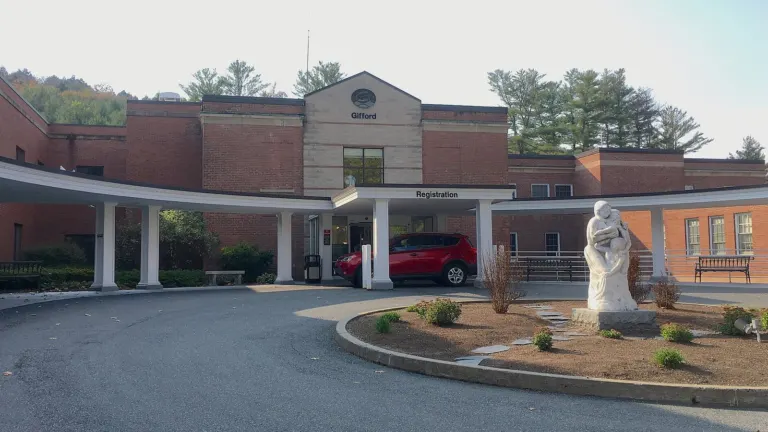
The former St. Michael's High School building in Montpelier. VEHI, based in nearby Berlin, manages health benefits for about 33,000 school employees and their families. Photo: Kenneth C. Zirkel, CC BY 4.0, via Wikimedia Commons.
Health insurance premiums for Vermont teachers and other school employees are on track for their smallest increase in nearly two decades, after the Vermont Education Health Initiative’s board authorized a filing that would raise rates by an average of 2.5 percent next school year.
On Oct. 20, the VEHI board directed staff to file fiscal 2028 premium rates for active employees and their dependents with the Vermont Department of Financial Regulation. If approved, the rates would take effect July 1, 2027. A formal decision is expected in January. VEHI called the 2.5 percent average the lowest increase it has filed with the department since the 2009-2010 school year. The unapproved monthly rates posted with the announcement show proposed increases of 2.3 percent for the Platinum and Gold plans, 2.5 percent for Gold CDHP and 2.9 percent for Silver CDHP.
The self-insured trust manages health benefits for about 33,000 school employees and their families, Vermont Public reported Nov. 10. VEHI projects it will collect about $418 million in premiums next year, roughly $10 million more than this year, and that school employees themselves absorb about 20 percent of the premium cost under a statewide contract.
Mark Hage, a trust manager at VEHI, told Vermont Public that “prices are really the biggest factor” and that, “by focusing on excessive prices, we were able in the last two years to reduce spending by approximately $44 million.” The official filing itemizes more recent savings: Green Mountain Care Board hospital budget orders that cut commercial reimbursements 2.9 percent statewide, including 4.4 percent at the University of Vermont Medical Center, reducing VEHI’s rate increase by $2.1 million; lower 2026 reimbursement rates that Blue Cross of Vermont, the trust’s third-party administrator, negotiated with UVM Health Network hospitals, projected to reduce VEHI’s costs by more than $12 million; and new contract terms with pharmacy benefit manager Optum Rx, estimated to save $5.3 million. VEHI also said it rebuilt reserves in fiscal 2026 and was able to contribute less to reserves in the new filing.
The announcement points back to fiscal 2027 savings as well, including $9.6 million from earlier board orders, $14.6 million from Act 55 of 2025, which capped hospital-administered drug charges at 120 percent of the Average Sales Price, and $16 million from excluding coverage of GLP-1 medications for weight loss only. Those drugs remain covered for patients with Type 2 diabetes and certain cardiovascular conditions, VEHI said.
Sue Ceglowski, executive director of the Vermont School Boards Association, called the smaller increase “welcome news” in an email to Vermont Public, with a caution. “Vermont’s health benefits costs remain among the highest in the nation and the burden on school budgets continues to grow,” she wrote. “In 2018, health benefits accounted for less than 10% of school budgets. Today they make up about 15%.”
Add Vermont Daily News as a preferred source on Google (opens in a new tab)