UVM lands $6 million NSF award to help move research into use in Vermont
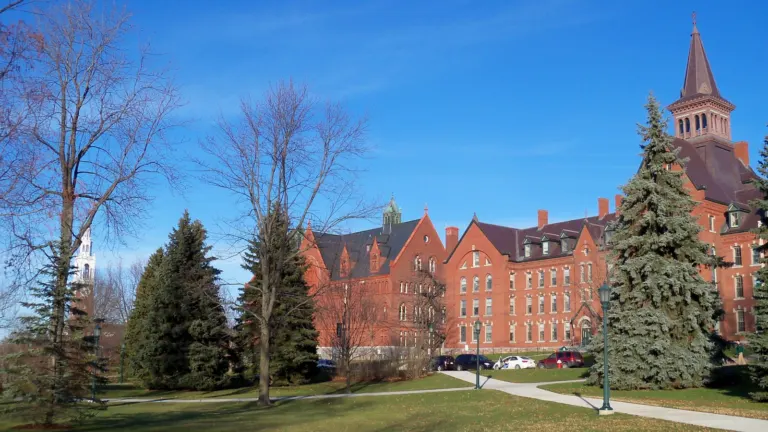
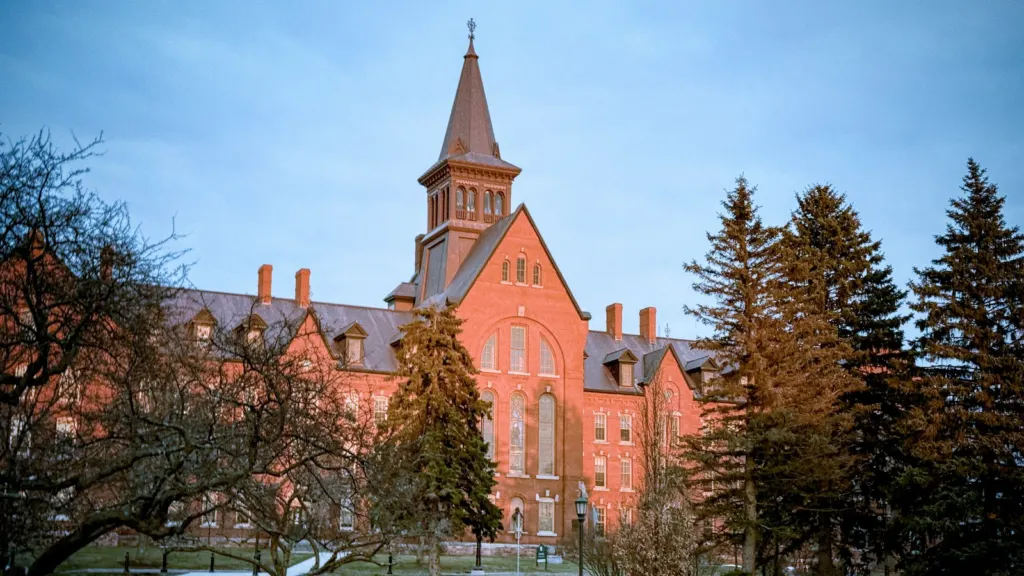
Old Mill, the oldest building on the University of Vermont campus in Burlington. Photo: HeyTomek, CC0, via Wikimedia Commons.
The University of Vermont said Nov. 2 that it has received a $6 million award from the National Science Foundation’s Accelerating Research Translation program to help move campus discoveries into practical use in Vermont.
The four-year initiative, called INVEST, for Identifying and Nurturing Vermont’s Emerging Strategic Technologies, will offer training, mentorship and seed funding to faculty, graduate students and postdoctoral researchers, the university announced. The Burlington Free Press reported the award the following week.
“Researchers are trained to discover new things and solve difficult problems, but they do not always receive training in how to move those discoveries into the world,” said Sara Helms Cahan, UVM’s associate vice president for research and director of INVEST. “This initiative will create that bridge, giving researchers the skills, resources, and supportive environment they need to turn their work into something that people and communities can use.”
The program will concentrate on three areas aligned with Vermont’s science and technology planning: food systems, complex systems and biomedical engineering, including work on sustainable and regenerative agriculture, digital technologies and artificial intelligence, and biomedical innovation for rural and aging populations. INVEST will set up an innovation incubator in each focus area, with seminars, workshops, networking and mentorship, and it will develop graduate micro-certificates and certificates in research innovation and entrepreneurship, plus Innovation Fellowships.
Nine entrepreneurial research teams will compete for seed funding. The largest awards are expected to reach as much as $150,000 over two years. Bryn Loftness, a translational research scientist at the Vermont Complex Systems Institute who helped write the proposal and will serve as a leading mentor, said non-dilutive early funding is “some of the hardest money to find, and the first $50,000 can open a lot of doors.” A workshop series, in person and online, is planned for this winter.
Alexa Woodward, executive director of UVM’s Complex Systems Institute, said the work is an opportunity to start “home-grown companies, Certified B Corporations, and non-profits that contribute to our technology ecosystem and create high paying jobs for Vermonters.” Cornell University will serve as UVM’s mentoring institution as the university builds that translational capacity, the announcement said. Kirk Dombrowski, vice president for research and economic development, called research translation “a critical goal of UVM’s research enterprise because it transforms knowledge into tangible benefits for society.”
Add Vermont Daily News as a preferred source on Google (opens in a new tab)