Vermont heating oil holds above $6 as bigger state fuel aid heads out
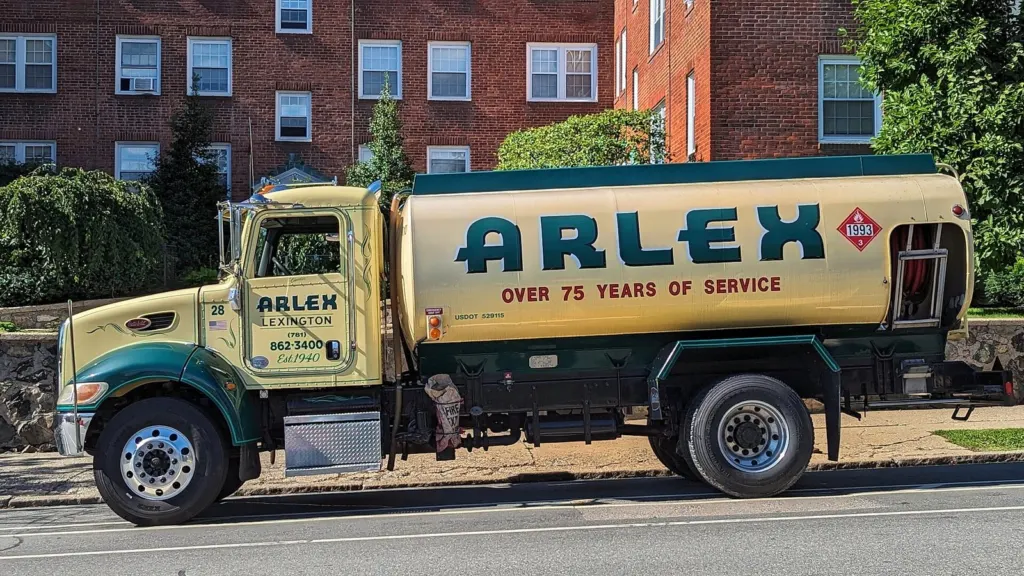
A heating oil delivery truck. Photo: Daderot, CC0, via Wikimedia Commons.
Vermonters who heat with oil are heading into the cold months paying about $2.58 a gallon more than they did a year ago.
The average residential price for No. 2 heating oil in Vermont was $6.071 a gallon in the week of Nov. 2, according to the U.S. Energy Information Administration’s weekly state survey. In the same week of 2025 it was $3.491. The price first topped $6 in mid-October and has hovered just above it since, peaking at $6.097 in the Oct. 19 survey.
The jump came fast this year. Vermont’s average sat just under $4 through February, then climbed past $5 in March. The Vermont Fuel Dealers Association told WCAX this week that the small dip in recent weeks may reflect a lull in the Iran war, and that the warm fall has kept early-season demand down.
“That doesn’t mean that we’re not going to have a cold winter or even a cold spring,” the association’s Matt Cota told the station. The first widespread snow of the season was forecast for Thursday into Friday.
Propane has held steadier
Propane has not moved nearly as much. EIA put Vermont’s average residential propane price at $3.941 a gallon in the Nov. 2 survey, up from $3.652 in early October. Propane delivers less heat per gallon than oil, so the two prices aren’t a straight comparison, but households on propane are not seeing the same spike.
That gap is why the state targeted its extra heating help at oil and kerosene. In a proposal to the Emergency Board in October, the Department for Children and Families said households heating with oil were facing about a 76% price increase over last year and kerosene users about 61%, while propane prices had “remained level.”
Where the state aid stands
The Emergency Board approved $15.3 million in state money last month on top of Vermont’s federal Low Income Home Energy Assistance Program grant. Of that, $12.7 million raises the seasonal benefit for roughly 7,830 households that heat with oil or kerosene, with the goal of covering about 62% of their estimated heating need. Last winter the program covered about 45%, or roughly $1,210 per household, according to the department.
The other $2.6 million doubles the crisis fuel program, run through five community action agencies, from about 2,400 households to about 4,800. DCF said the bigger seasonal benefit is meant to go out with the usual mid-November payments and that the crisis program begins serving households on Nov. 30.
The money does not go to households directly. DCF pays it to each family’s fuel dealer as a credit on the account, as it does every year.
Vermont has received 90% of its federal LIHEAP award so far, $20,347,375. The rest typically arrives in late winter.
What households can do now
Households that got fuel assistance last season are sent an annual review form. New applicants can apply online through the state’s myBenefits portal, in person at a DCF district office, or by mail after requesting a paper application at 1-800-479-6151, according to the department’s fuel assistance page. Eligibility is based on gross monthly household income at or below 185% of the federal poverty level.
Approved households also qualify for free weatherization services, which can cut how much fuel a home burns in the first place. People who are close to running out of fuel can call 211 to be connected with crisis help.
Add Vermont Daily News as a preferred source on Google (opens in a new tab)