Vermont gets nearly $190 million more in federal rural health money
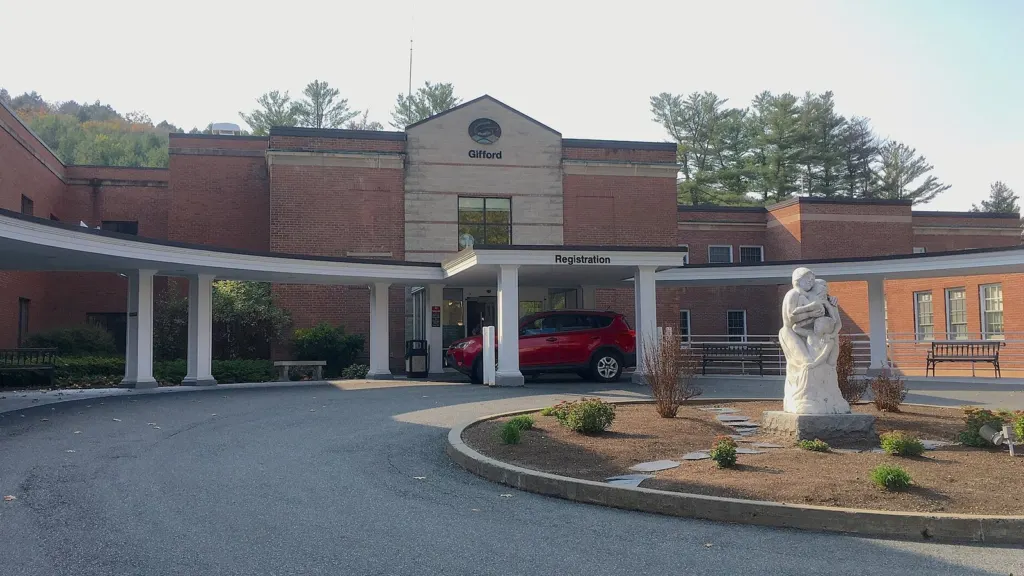
Gifford Medical Center in Randolph. Photo: Jessamyn, CC BY-SA 4.0, via Wikimedia Commons.
Vermont will receive nearly $190 million next year from the federal Rural Health Transformation Program, a slightly smaller award than the $195 million it got in the program’s first year.
Gov. Phil Scott announced the second-year figure Thursday at Gifford Medical Center in Randolph, one of the hospitals already in line for first-year money. Gifford, a critical access hospital and health clinic, is set to receive about $3.5 million, Vermont Public reported.
“Gifford will be able to modernize its facilities, use technology to streamline administrative work, give providers more time with patients and support mentorship programs to help strengthen our healthcare workforce,” Scott said.
At Gifford, the money will pay for AI scribe software that drafts clinical notes, simulation training equipment and the Maple Mountain Residency Program, which trains early-career doctors in a rural setting. “If you want a doctor to practice in a small town, train them in a small town,” Gifford CEO Michael Costa said.
Where the first $195 million went
The program is a five-year federal initiative created in the 2025 tax and spending law, often called the “One Big Beautiful Bill.” Vermont’s first-year award has already been spread across a long list of projects: incentives to recruit and keep health workers, technology upgrades, consulting contracts and expanded primary care.
Because the program includes minimum awards for every state, small Vermont gets one of the largest per-person grants in the country. If the state keeps receiving about the same amount each year, the total could approach $1 billion over five years.
Vermont Medicaid director Jill Mazza Olson said the state expected the slight drop. Part of each award is tied to state policy choices, and in the first year the Centers for Medicare and Medicaid Services mistakenly gave Vermont credit for getting rid of its certificate of need process, the review that requires state approval for large health care projects. Vermont still has that process.
The Medicaid side of the ledger
The rural health money was added late in negotiations over the 2025 law and was widely seen as a way to soften the political impact of the law’s Medicaid cuts. Critics say the state could still come out behind.
State analysts have estimated that up to 49,000 Vermonters could lose Medicaid coverage under the new rules, most of which take effect starting in 2027. KFF, the health policy research group, has estimated Vermont could lose between $1 billion and $2 billion in Medicaid money over 10 years.
Vermont Health Care Advocate Mike Fisher said he understands why the administration wants to highlight a “tremendous amount of money,” but he called the rural health funds little more than a diversion from what is coming. “I don’t think we should be distracted by that,” he said.
Politics may change the math. Democrats won back majorities in the U.S. House and Senate last week and have said rolling back the Medicaid cuts is a top priority when the new Congress is seated. Sen. Bernie Sanders, who plans to return as chair of the Senate HELP Committee, has made the same pledge.
What Vermonters on Medicaid should watch
The changes do not hit all at once. Most of the new requirements, including work reporting rules and more frequent eligibility checks for many adults covered through the Medicaid expansion, begin in 2027, and the state has to set up the systems to run them. People covered through Green Mountain Care should make sure the state has a current mailing address and watch for renewal notices.
Separately, open enrollment for private plans on Vermont Health Connect is underway with higher 2027 premiums and an earlier deadline, details we covered in our enrollment guide.
Add Vermont Daily News as a preferred source on Google (opens in a new tab)