South Burlington’s bus-priority signals cut red-light waits by two-thirds on Dorset Street
Photo: LunchboxLarry / Wikimedia Commons, CC BY-SA 2.0
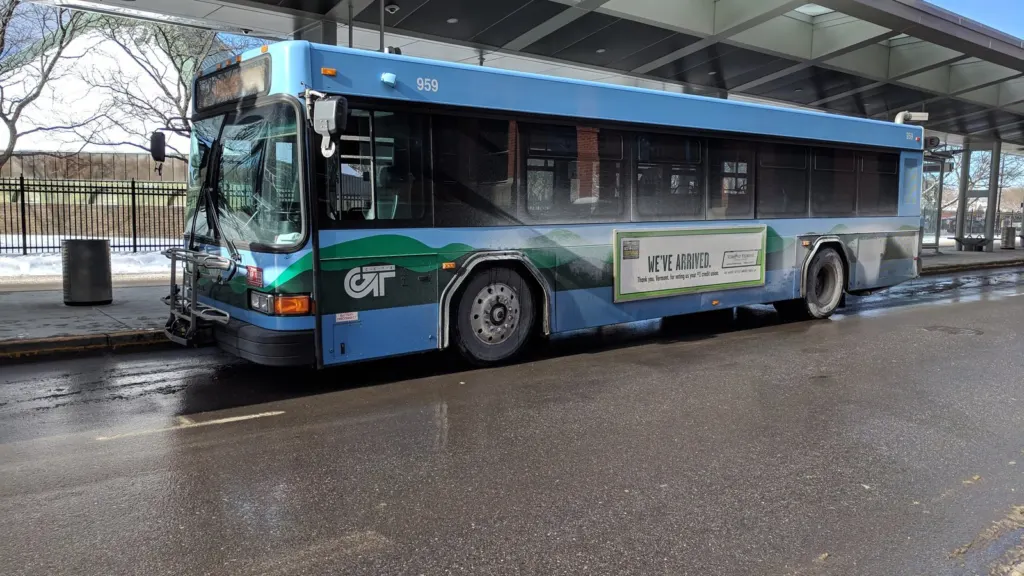
South Burlington’s test of bus-priority traffic signals on Dorset Street has cut the time Green Mountain Transit buses spend waiting at red lights by roughly two-thirds, well past the target the city wrote into the deal. The same numbers show the cost to drivers on the side streets ran a little higher than the pilot allowed.
The six-month trial covers four signals on Dorset Street: the Barnes & Noble entrance, Market Street, the Blue Mall and Garden Street. It is the first transit signal priority system in Vermont, and the city and GMT now want to keep it running into 2027.
For riders on GMT’s busiest line, the No. 1 between downtown Burlington, the University of Vermont, South Burlington and Williston, the change is measured in seconds per trip. For the city, it is a small test of whether cheap software can make buses more competitive on a corridor it has been filling with new housing.
What the city set out to prove
The pilot runs on software from LYT, a California company, that reads each bus’s live location, estimates when it will reach a light and asks the signal controller to hold or bring up a green. Unlike the preemption systems that fire trucks use, it does not override the light cycle.
The pilot agreement in the City Council’s packet spelled out three tests of success: a 20% cut in red-light delay at the participating intersections, a 1.5 mph gain in average corridor speed, and cross-traffic impacts held to 2 seconds. The agreement says the idea came out of a July 2025 LYT presentation to the Chittenden County Regional Planning Commission, which then brought the city and GMT together around the Route 1 Williston corridor.
The memorandum of understanding between the city and GMT puts the price at $16,256. South Burlington pays LYT $9,756 in setup and test charges, and GMT sends the city $6,500. The document set a March-to-September 2026 window and requires both sides to meet within 30 days after the pilot ends to decide whether to end, extend or expand it.
How the results stack up
The first numbers from the trial were reported Monday by VTDigger, which said the system has been live at the four intersections since June. According to data South Burlington Public Works Director Erica Towle shared with VTDigger, outbound No. 1 buses used to wait a combined 66 seconds at the four lights and now wait about 22. Inbound, the wait fell from 74 seconds to about 11.
Set against the agreement, that is a 67% cut outbound and about 85% inbound, three to four times the 20% goal. VTDigger reported that GMT’s No. 11 City Connector, which also uses Dorset Street, saw similar drops.
The cross-traffic figure is closer. Drivers on the streets that meet Dorset have seen at most 4 seconds of added delay on average, according to the same data, against the 2-second ceiling in the pilot’s success criteria. Towle told VTDigger the city has not received complaints about it. No figure has been released yet for the third test, average corridor speed.
Chris Damiani, GMT’s planning director, acknowledged to VTDigger that a few seconds per light is a small gain, and said the value is in giving drivers a cushion against delays and in adding up savings across many intersections if the system spreads.
Why Dorset Street
The No. 1 carried about 45,000 riders in each of the past two months, according to GMT figures cited by VTDigger, and Dorset Street sits next to the city’s newest high-density development. The council has spent the fall on that same stretch, from the $200,000 it set aside to help preserve Dorset Commons to the Old Farm Road request from O’Brien Brothers. GMT has said it wants signal priority at more intersections, which would mean new agreements with each city that owns the lights.
The next step is the cost. Towle and Damiani told VTDigger they want to extend the pilot into 2027 but have not settled what that would cost, and any extension with a new price would come back to the City Council for approval. More South Burlington coverage is in our Local News section, and transportation and software stories are collected under Technology.
Add Vermont Daily News as a preferred source on Google (opens in a new tab)