Vermont’s 2027 legislative session opens Jan. 6: key dates and how to follow it
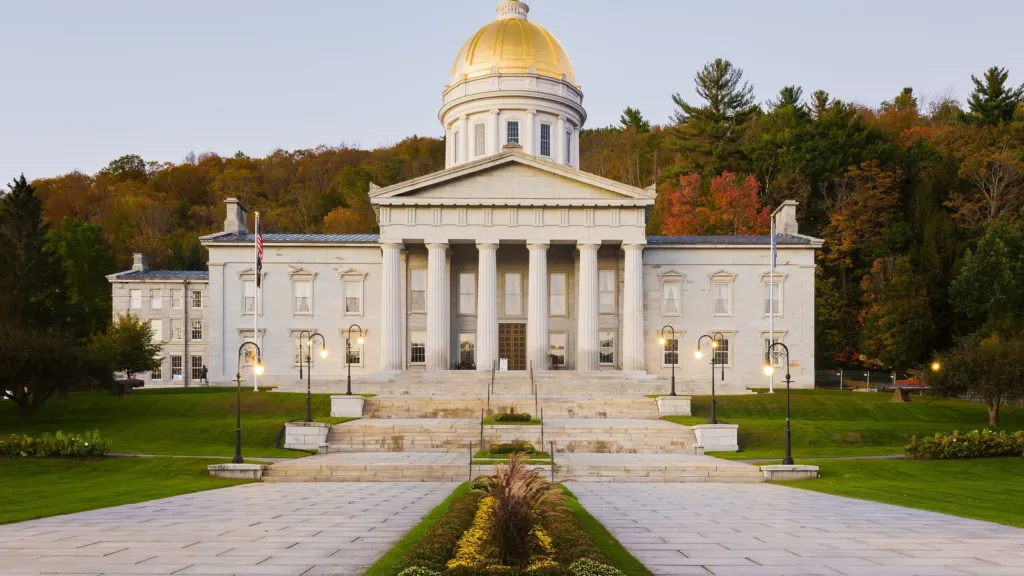
The Vermont State House in Montpelier, where the 2027-28 Legislature convenes Jan. 6. Photo: King of Hearts / Wikimedia Commons, CC BY-SA 4.0
Vermont’s newly elected Legislature has seven weeks before it gavels in. The 2027-28 biennium opens Wednesday, Jan. 6, when all 150 House members and 30 senators are sworn in at the State House in Montpelier, and the first week moves fast.
Here is the early calendar, taken from the Sergeant-at-Arms office’s 2027 legislative calendar, which the office labels subject to change, along with the basics of following the session from home.
Key dates so far
- Jan. 6: First day of the session. Each chamber organizes on day one, which includes the House electing its speaker. We laid out who is running for speaker and Senate president pro tempore last week.
- Jan. 7: Two joint assemblies of the House and Senate, one to receive the canvassing committee’s report on statewide election results and one to hear the governor’s inaugural message. Gov. Phil Scott won a sixth term on Nov. 3. Times have not been set.
- Jan. 18: Martin Luther King Jr. Day, no session.
- Budget address: The joint assembly for the governor’s budget message is listed as to be determined. In recent years it has come later in January.
- Jan. 31: Deadline for House members to request standard-form bills from legislative staff under House Rule 40.
- Feb. 15: Presidents’ Day, no session.
- March 1 to 5: Town Meeting break, so lawmakers can be home for Town Meeting Day on Tuesday, March 2.
The calendar also lists the crossover deadlines, the dates by which policy bills and money bills must clear their last committee in one chamber to stay alive for the year. Those dates are still blank. Crossover usually falls in March and is the point where many bills quietly die.
When the chambers meet
Most of the real work happens in committee rooms during the day, but floor sessions follow a weekly rhythm. The draft schedule has the House on the floor at 10 a.m. Tuesdays, 1 p.m. Wednesdays and Thursdays, and 9:30 a.m. Fridays. The Senate meets at 9:30 a.m. Tuesdays, 1 p.m. Wednesdays and Thursdays, and 11:30 a.m. Fridays. There are no floor sessions scheduled on Mondays.
Following along from home
You don’t need to drive to Montpelier to keep up. The Legislature’s website posts each committee’s weekly agenda, the bills it is taking up and the written testimony it receives. Committee meetings and floor sessions stream live on YouTube, and most recordings stay online, which makes it possible to catch up on a hearing after the fact.
A few practical tips:
- Use the site’s legislator lookup to find your House and Senate members by town. Many districts send more than one, so you may have two or three of each.
- Bills are numbered as they are introduced, H. for House and S. for Senate. Searching a bill number brings up its text, sponsors and every action taken on it.
- To testify, contact the committee’s assistant, listed on each committee page. Committees decide whom to hear, and written testimony is often accepted even when there is no time slot.
- The State House is open to visitors during the session, and the public galleries in both chambers are open during floor debate.
A few new faces
The Senate that convenes in January includes at least one historic arrival. Rutland County voters elected Dave Wolk, a former Democratic senator who ran this year without a party. The Mountain Times reported he is the first independent ever elected to the chamber. Housing, property taxes, health care costs and changes to how Vermont pays for schools will compete for time from the first week.
We will update these dates as the Legislature fills in the rest of its calendar. For ongoing Statehouse coverage, see our Politics section.
Add Vermont Daily News as a preferred source on Google (opens in a new tab)