Vermont’s minimum wage rises to $14.91 on Jan. 1
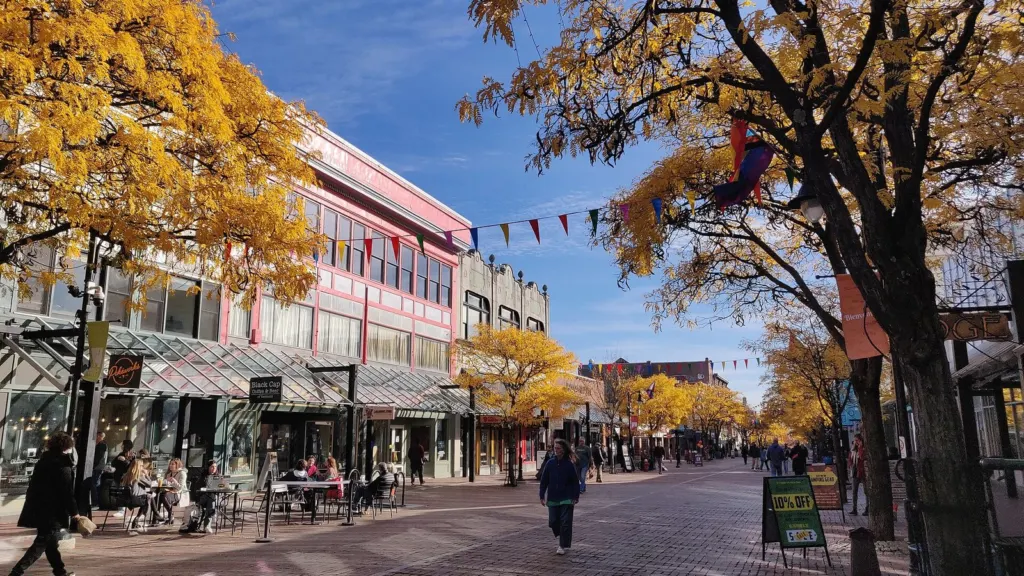
Shops on Burlington's Church Street Marketplace. Photo: Sdkb, CC BY-SA 4.0, via Wikimedia Commons.
Vermont’s minimum wage will go up 49 cents on New Year’s Day, to $14.91 an hour, the Vermont Department of Labor announced Monday.
The current rate is $14.42. The department’s notice says the wage for tipped service workers, which is set at half the regular minimum, rises from $7.21 to $7.46 an hour on the same date. Employers who pay the tipped rate still have to make up the difference if a worker’s tips don’t bring them to the full $14.91 for the hours worked in a week.
Nobody voted on this year’s raise. Under 21 V.S.A. § 384, the wage adjusts every January by the lesser of 5% or the rise in the Consumer Price Index. The department uses the national CPI-U, not seasonally adjusted, measured from August to August. That index rose 3.4% over the past year, which produced the 49-cent increase, the Valley News reported. Last January the wage went up 41 cents, from $14.01.
What it means on a paycheck
For someone working 40 hours a week all year, 49 cents an hour works out to a little over $1,000 before taxes. Payroll publisher Bloomberg Tax flagged the new rate for employers this week, and businesses that pay at or near the floor have about seven weeks to update their systems.
In much of Vermont, the change will barely register. Many Upper Valley employers already advertise entry-level jobs at $15 or more, and Dartmouth economist Patricia Anderson told the Valley News the raise won’t have much effect there. She said that in rural parts of the state, a few small businesses might hold off on hiring, though at 49 cents the change is modest.
Chris Winters, deputy commissioner of the Labor Department, told the paper that the state sees taxes, housing and health care costs as bigger levers on affordability than small wage changes.
How Vermont compares
Vermont will still have the second-lowest minimum wage in New England. Connecticut, Maine, Massachusetts and Rhode Island are all at $15 or more. New Hampshire uses the federal minimum of $7.25, which hasn’t changed since 2009.
Vermont is one of 19 states that tie their minimum wage to inflation each year, according to the Economic Policy Institute, which ranked Vermont’s 2026 rate 19th-highest in the country.
The gap between the minimum and what it takes to live here is still wide. The Legislature’s Joint Fiscal Office put the state’s 2024 livable wage at $19.53 an hour in urban areas and $17.68 in rural areas in its January 2025 report.
How the law got here
The current version of the law took effect in 2020, when the Legislature overrode Gov. Phil Scott’s veto of a bill that raised the wage in steps to $12.55 by 2022. Automatic inflation adjustments resumed after that. Business groups have argued against faster increases for years, saying higher labor costs lead small employers to cut hours or hold off on hiring. The automatic formula has kept the annual question out of the Statehouse.
Workers who think they’re being paid below the minimum can contact the Labor Department’s Wage and Hour Unit at 802-951-4083 or through labor.vermont.gov/rights-and-wages.
Add Vermont Daily News as a preferred source on Google (opens in a new tab)