Vermont gets $60.3 million to rebuild 60 miles of Western Corridor rail
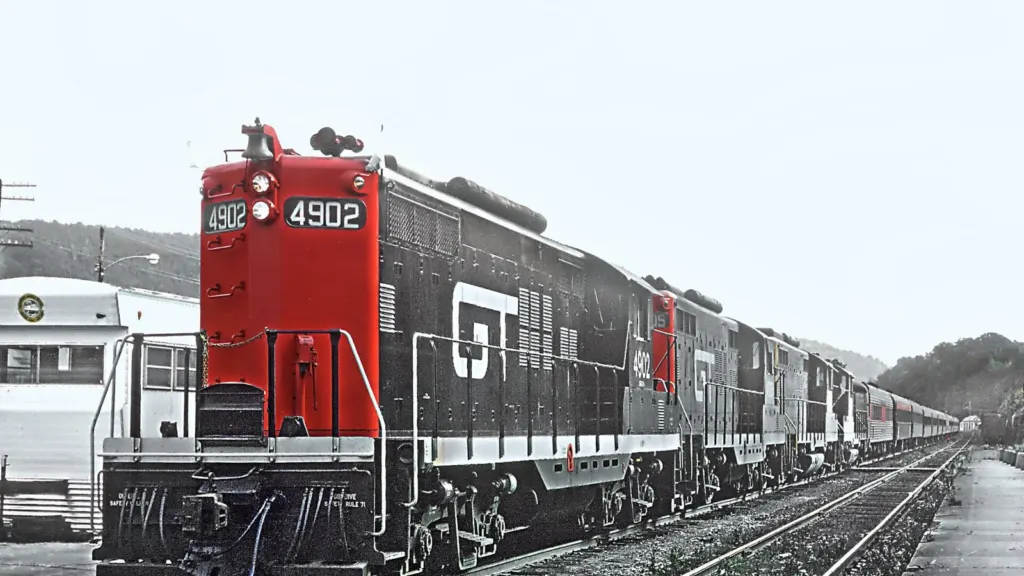
A Vermont-area locomotive in White River Junction. Photo: Roger Puta, public domain, via Wikimedia Commons.
Vermont will put $60.3 million in federal rail money into about 60 miles of track between Rutland and North Bennington, a rebuild aimed first at freight and, down the road, at clearer options for passenger service along the Western Corridor.
Sens. Bernie Sanders and Peter Welch and Rep. Becca Balint announced the award Oct. 20. The money comes from the U.S. Department of Transportation’s Consolidated Rail Infrastructure and Safety Improvements program and will be administered by the Vermont Agency of Transportation.
“Repairing and upgrading our transportation infrastructure is a win-win for Vermont’s rural communities,” the delegation said in a joint statement. “This federal funding will help improve safety and reliability on the Vermont Railway, and support the development of rural towns up and down the Western Corridor.”
What gets rebuilt
The project replaces jointed “stick” rail — short sections bolted together with gaps — with continuously welded rail. Crews will also realign track and upgrade ties, ballast, turnouts and 22 at-grade crossings, according to the federal announcement and VTrans.
Dan Delabruere, VTrans rail director, has said welded rail is heavier and removes the joints that force trains to slow. The rebuilt line is designed to handle 286,000-pound railcars, the standard weight Class I railroads want for through freight.
“This grant will support Vermont businesses who rely on rail to get their products to market regionally and nationally,” Transportation Secretary Joe Flynn said. “For bulk commodities, shipping by rail is often the most cost-effective, and upgrades to the Vermont Railway in western Vermont will enable our businesses to efficiently tap into the nation’s major Class I railroads.”
Why Rutland and Bennington care
Sarah Furman, executive director of the Chamber & Economic Development of the Rutland Region, called the investment a step toward keeping manufacturers and shippers in the region. Heavier, faster freight cuts costs for companies that move stone, lumber, fuel and other bulk goods that do not fit well on trucks alone.
Passenger advocates have watched the Western Corridor for years as a missing link toward service that could eventually connect Bennington County toward New York. Officials describe this grant as completing the freight spine first. Passenger schedules would still need separate equipment, stations and operating agreements.
Construction timing will follow VTrans contracting and track windows on the Vermont Railway. For towns between Rutland and North Bennington, the immediate change is quieter and more reliable freight; the longer bet is whether finished track makes passenger service financially easier to argue for later.
Western Corridor towns have heard passenger promises before. What is different this time is a funded freight scope with a clear mile count, crossing list and weight target. If VTrans and Vermont Railway hit those marks on schedule, the next debate shifts from whether the track can handle modern cars to who pays to run trains that carry people.
Contractors, railroad crews and town public-works departments will feel the project before passengers do. Crossing upgrades alone mean temporary road closures and detours in villages that already plan around freight schedules. The payoff, if the work stays on budget, is a Western Corridor that can finally carry modern freight without apologizing for the joints in the rail.
Federal CRISI grants are competitive, and Vermont’s award reflects years of Western Corridor planning already on the shelf. Completing this segment also strengthens the case for future asks — signaling systems, sidings, or station work — because DOT prefers corridors that are already modernized. Missing the construction window would waste more than a single grant cycle.
Vermont Railway will have to sequence work around active freights that already move stone, fuel and other bulk loads. Long outages are expensive; short windows stretch the calendar. Shippers watching the project want fewer slow orders, not a year of detours. How VTrans writes the construction phasing into the grant agreement will matter as much as the welded rail itself.
Add Vermont Daily News as a preferred source on Google (opens in a new tab)